Paralysis Physiotherapy at Home in Gurugram
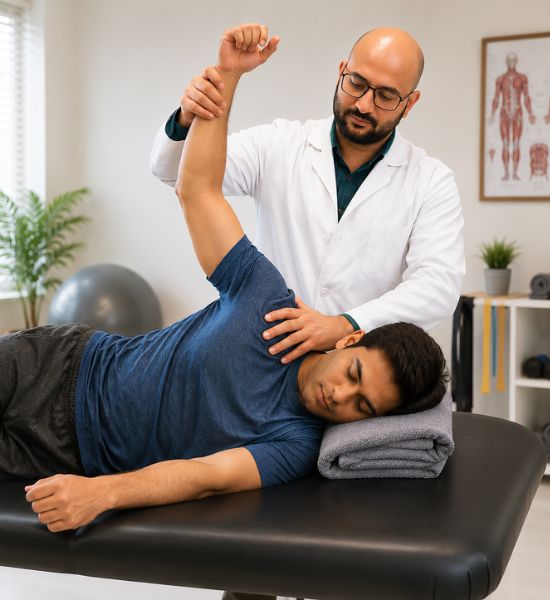
At UM Physiotherapy, we provide specialized Paralysis Physiotherapy at Home in Gurugram, helping patients recover in a safe and familiar environment. Led by Dr. Mohd Umar Mukhtar Qurashi, a Gold Medalist Physiotherapist and HCPC Registered Physiotherapist (UK), our neurological rehabilitation programs are designed to improve mobility, reduce complications, and maximize independence.
Whether paralysis is caused by stroke, spinal cord injury, neurological disorders, brain injury, or nerve damage, personalized physiotherapy can play a vital role in recovery.
What is Paralysis?
Paralysis is the loss of muscle function in part of the body due to damage to the nervous system.
Depending on the cause and severity, paralysis may affect:
- One arm or leg
- One side of the body
- Both legs
- Both arms and legs
- Facial muscles
- Balance and coordination
Many patients also experience weakness, stiffness, poor balance, reduced mobility, and difficulty performing everyday tasks.
How Physiotherapy Helps Paralysis Patients
Paralysis Physiotherapy focuses on improving movement, strengthening muscles, enhancing coordination, and helping patients regain functional independence.
The primary goals include:
- Improving mobility
- Increasing muscle strength
- Enhancing balance
- Improving walking ability
- Preventing muscle wasting
- Reducing stiffness and spasticity
- Improving confidence and independence
Consistent rehabilitation can significantly improve long-term outcomes.
Conditions That May Cause Paralysis
Stroke
Stroke is one of the most common causes of paralysis.
Many patients experience weakness on one side of the body and require long-term rehabilitation.
Learn More: Stroke Rehabilitation at Home
Spinal Cord Injury
Damage to the spinal cord may result in partial or complete paralysis depending on the severity and location of the injury.
Brain Injury
Traumatic brain injuries can affect movement, coordination, balance, and muscle control.
Neurological Disorders
Certain neurological conditions may cause progressive weakness and mobility limitations.
Examples include:
- Parkinson’s Disease
- Multiple Sclerosis
- Motor Neuron Disorders
- Neuromuscular Conditions
Nerve Damage
Peripheral nerve injuries can result in weakness, loss of movement, and reduced functional ability.
Benefits of Paralysis Physiotherapy at Home
Comfortable Recovery Environment
Patients often feel more confident and motivated when rehabilitation takes place in their own home.
Functional Training
Exercises are tailored to real-life activities and home-based movement challenges.
Reduced Travel Burden
Traveling can be difficult for paralysis patients. Home rehabilitation removes this obstacle.
Family Education and Support
Family members learn safe techniques to assist patients during recovery.
Personalized Care
Each treatment program is customized according to the patient’s condition and recovery goals.
Components of Paralysis Rehabilitation
Strength Training
Specific exercises help improve muscle activation and increase strength.
Balance Training
Balance exercises improve stability and reduce fall risk.
Gait Training
Walking retraining helps patients develop safer and more efficient movement patterns.
Range of Motion Exercises
Regular movement helps prevent stiffness and maintain joint flexibility.
Functional Rehabilitation
Patients practice activities necessary for daily living, including sitting, standing, transfers, and walking.
Mobility Training
Improving mobility helps increase independence and confidence.
Signs That a Paralysis Patient Needs Physiotherapy
You should consider Paralysis Physiotherapy at Home in Gurugram if the patient experiences:
- Difficulty walking
- Muscle weakness
- Poor balance
- Difficulty standing independently
- Reduced mobility
- Joint stiffness
- Increased fall risk
- Difficulty performing daily activities
Early rehabilitation often leads to better recovery outcomes.
Why Choose Dr. Mohd Umar Mukhtar Qurashi?
Choosing an experienced neurological rehabilitation specialist can significantly improve recovery potential.
Professional Credentials
- Gold Medalist in Master of Physiotherapy
- HCPC Registered Physiotherapist (United Kingdom)
- Associate Team Leader – Physiotherapy at Artemis Hospital, Gurugram
- More Than 10 Years of Clinical Experience
- Certified Dry Needling Practitioner
- Certified Functional Manipulation Specialist
Expertise in Neurological Rehabilitation
Dr. Umar specializes in:
- Stroke Rehabilitation
- Paralysis Rehabilitation
- Balance Disorders
- Spinal Cord Injury Rehabilitation
- Neurological Recovery Programs
- Home Physiotherapy in Gurugram
Related Home Physiotherapy Services
Stroke Rehabilitation at Home in Gurugram
Comprehensive rehabilitation programs for stroke survivors.
Learn More: Stroke Rehabilitation at Home
Physiotherapy for Bedridden Patients
Specialized care for patients with severe mobility limitations.
Learn More: Physiotherapy for Bedridden Patients
Home Physiotherapy for Senior Citizens
Geriatric rehabilitation focused on mobility and independence.
Learn More: Home Physiotherapy for Senior Citizens
Home Physiotherapy in Gurugram
Explore all home physiotherapy services.
Learn More: Home Physiotherapy in Gurugram
Frequently Asked Questions
1. Can physiotherapy help paralysis patients recover?
Yes. Physiotherapy helps improve strength, mobility, balance, and independence while reducing complications associated with paralysis.
2. How soon should physiotherapy begin after paralysis?
Rehabilitation should begin as early as medically appropriate to maximize recovery potential.
3. Is home physiotherapy effective for paralysis patients?
Yes. Paralysis Physiotherapy at Home in Gurugram allows patients to practice real-life activities in their natural environment.
4. Can physiotherapy help improve walking after paralysis?
Many patients experience improvements in walking ability through structured gait training and strengthening programs.
5. How long does paralysis rehabilitation take?
Recovery timelines vary depending on the cause, severity, overall health, and consistency of treatment.
Book Paralysis Physiotherapy at Home in Gurugram
Recovery from paralysis requires expert guidance, structured rehabilitation, and consistent support.
Receive professional Paralysis Physiotherapy at Home in Gurugram from Dr. Mohd Umar Mukhtar Qurashi, an experienced neurological rehabilitation specialist dedicated to helping patients achieve maximum independence and recovery.
Why Choose UM Physiotherapy?
✓ Paralysis Physiotherapy at Home in Gurugram
✓ Specialized Neuro Rehabilitation
✓ Balance & Gait Training
✓ Home Visits Across Gurugram
✓ Personalized Recovery Programs
✓ HCPC Registered Physiotherapist (UK)
✓ 10+ Years of Clinical Experience
Call: +91 87965 56680
Email: appointment@drumarmukhtar.com
Take the first step toward improved mobility, independence, and quality of life today.