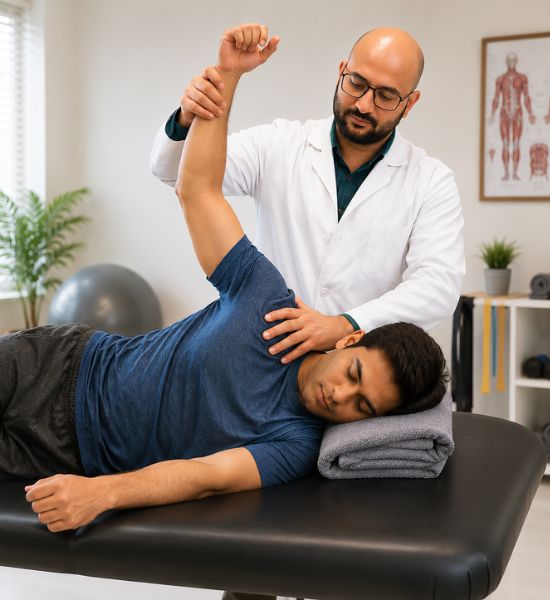
Heel Pain Treatment in Gurugram
Many people experience severe pain with their first few steps in the morning, while others notice discomfort after prolonged standing, walking, exercising, or climbing stairs.
At UM Physiotherapy, we provide evidence-based Heel Pain Treatment in Gurugram focused on identifying the root cause of pain, improving foot function, restoring mobility, and preventing recurrence.
Under the guidance of Dr. Mohd Umar Mukhtar Qurashi, a Gold Medalist Physiotherapist, HCPC Registered Physiotherapist (United Kingdom), Associate Team Leader – Physiotherapy at Artemis Hospital, and a clinician with over 10 years of advanced experience, patients receive personalized treatment programs designed to achieve long-term relief.
What is Heel Pain?
Heel Pain refers to discomfort occurring beneath, behind, or around the heel bone.
The pain may range from mild irritation to severe discomfort that affects:
- Walking
- Standing
- Running
- Exercise
- Daily Activities
Heel pain can develop gradually over time or occur suddenly following injury or overuse.
Common Causes of Heel Pain
Several conditions can contribute to Heel Pain.
Identifying the exact cause is essential for effective treatment.
Plantar Fasciitis
The most common cause of chronic heel pain.
The plantar fascia is a thick band of tissue running along the bottom of the foot.
When irritated or overloaded, it can cause:
- Morning Heel Pain
- Pain While Walking
- Foot Tightness
- Tenderness Under the Heel
Read More: Plantar Fasciitis Treatment in Gurugram
Heel Spur
A heel spur is a bony growth that develops near the heel bone.
Symptoms may include:
- Heel Pain
- Walking Difficulty
- Localized Tenderness
Many heel spurs are associated with plantar fascia dysfunction.
Achilles Tendinopathy
The Achilles tendon connects the calf muscles to the heel bone.
Overuse may cause:
- Pain Behind the Heel
- Stiffness
- Reduced Athletic Performance
Foot Biomechanical Problems
Flat feet, high arches, or abnormal walking mechanics can increase stress on the heel.
Prolonged Standing
Individuals who stand for long periods often develop repetitive stress injuries affecting the foot.
Sports and Running Injuries
Athletes and runners frequently experience heel pain due to repetitive loading.
Symptoms of Heel Pain
Symptoms vary depending on the underlying cause.
Pain During the First Steps in the Morning
One of the most common signs of Plantar Fasciitis.
Pain While Walking
Patients often experience discomfort during weight-bearing activities.
Heel Tenderness
The heel may be painful when touched.
Foot Stiffness
Particularly after rest or inactivity.
Pain After Standing for Long Periods
Common in teachers, healthcare workers, and retail employees.
Reduced Activity Levels
Many patients avoid walking and exercise because of pain.
Who is at Risk of Heel Pain?
Certain groups are more likely to develop heel problems.
Runners
Repetitive impact increases stress on the foot.
Athletes
Sports involving jumping and running increase risk.
Teachers
Long hours of standing place continuous stress on the heel.
Healthcare Professionals
Extended standing and walking can contribute to symptoms.
Overweight Individuals
Excess body weight increases pressure on the feet.
Older Adults
Age-related tissue changes may increase susceptibility.
Why Heel Pain Should Not Be Ignored
Many people continue walking despite significant discomfort.
Untreated heel pain may lead to:
- Altered Walking Patterns
- Knee Pain
- Hip Pain
- Lower Back Pain
- Reduced Physical Activity
- Weight Gain
- Chronic Foot Dysfunction
Early physiotherapy intervention often leads to faster recovery and better long-term outcomes.
How Heel Pain Affects Daily Life
Persistent heel pain can interfere with:
- Walking
- Exercise
- Running
- Standing
- Household Activities
- Work Responsibilities
- Sports Participation
Many patients report reduced confidence and mobility because of ongoing symptoms.
How Physiotherapy Helps Heel Pain
Heel Pain Physiotherapy in Gurugram focuses on addressing the root cause of symptoms rather than simply masking pain.
Treatment may include:
Pain Management
Reducing irritation and discomfort.
Foot Mobility Exercises
Improving movement and flexibility.
Stretching Programs
Reducing tension in the plantar fascia and calf muscles.
Strength Development
Improving support around the foot and ankle.
Gait Analysis
Identifying walking abnormalities contributing to symptoms.
Functional Rehabilitation
Helping patients return to normal activities safely.
Benefits of Heel Pain Physiotherapy
Patients often experience:
✓ Reduced Heel Pain
✓ Better Walking Ability
✓ Improved Foot Mobility
✓ Increased Strength
✓ Improved Balance
✓ Better Activity Tolerance
✓ Reduced Risk of Recurrence
✓ Improved Quality of Life
Conditions Related to Heel Pain
Plantar Fasciitis Treatment in Gurugram
Plantar Fasciitis Treatment in Gurugram
Specialized treatment for chronic heel pain and plantar fascia irritation.
Ankle Sprain Treatment in Gurugram
Ankle Sprain Treatment in Gurugram
Rehabilitation for ankle injuries affecting walking mechanics.
Joint Pain Treatment in Gurugram
Joint Pain Treatment in Gurugram
Comprehensive management of lower limb pain and dysfunction.
Orthopedic Physiotherapy in Gurugram
Orthopedic Physiotherapy in Gurugram
Evidence-based treatment for musculoskeletal pain and rehabilitation.
Our Heel Pain Rehabilitation Approach
At UM Physiotherapy, every treatment plan is individualized.
Detailed Assessment
Understanding the exact source of pain.
Movement Analysis
Evaluating walking and foot mechanics.
Progressive Rehabilitation
Improving flexibility, strength, and function.
Functional Recovery
Helping patients regain confidence in movement.
Long-Term Prevention
Reducing the likelihood of future heel pain episodes.
Why Choose Dr. Mohd Umar Mukhtar Qurashi?
Professional Credentials
- Gold Medalist in Master of Physiotherapy
- HCPC Registered Physiotherapist (United Kingdom)
- Associate Team Leader – Physiotherapy at Artemis Hospital
- 10+ Years of Clinical Experience
- Certified Dry Needling Practitioner
- Certified Functional Manipulation Specialist
Expertise Includes
- Heel Pain Treatment
- Plantar Fasciitis Rehabilitation
- Foot Pain Physiotherapy
- Orthopedic Rehabilitation
- Sports Injury Rehabilitation
- Movement Analysis and Correction
Every treatment plan is designed to help patients achieve long-term relief and improved mobility.
Heel Pain vs Plantar Fasciitis
Many patients assume that all heel pain is caused by Plantar Fasciitis, but this is not always true.
Heel pain can develop from several different conditions, and proper diagnosis is essential for effective treatment.
Plantar Fasciitis
Plantar Fasciitis is the most common cause of heel pain.
It occurs when the plantar fascia becomes irritated or overloaded.
Common symptoms include:
- Sharp Pain Under the Heel
- Morning Heel Pain
- Pain During First Steps
- Pain After Rest
- Tenderness Along the Foot Arch
Heel Spur
A heel spur is a bony growth that develops near the heel bone.
Symptoms may include:
- Localized Heel Pain
- Tenderness
- Walking Discomfort
Many people have heel spurs without symptoms.
Achilles Tendinopathy
Pain is usually located behind the heel.
Common symptoms include:
- Pain During Running
- Stiffness
- Swelling
- Reduced Athletic Performance
Nerve-Related Heel Pain
Some patients experience heel pain due to nerve irritation.
Symptoms may include:
- Burning Sensations
- Tingling
- Numbness
- Radiating Pain
A professional physiotherapy assessment helps determine the exact cause.
Stages of Heel Pain Rehabilitation
Successful recovery requires a structured treatment approach.
Phase 1 – Pain Reduction
The initial goal is reducing irritation and improving comfort.
Treatment focuses on:
- Pain Management
- Load Modification
- Tissue Protection
- Activity Advice
Phase 2 – Mobility Restoration
Improving flexibility in:
- Foot Muscles
- Plantar Fascia
- Calf Muscles
- Ankle Joint
Better mobility often reduces stress on the heel.
Phase 3 – Strength Development
Strengthening exercises help improve support and shock absorption.
Target areas include:
- Foot Muscles
- Calf Muscles
- Ankle Stabilizers
- Lower Limb Muscles
Phase 4 – Walking Retraining
Correcting walking mechanics helps reduce excessive stress on the heel.
Phase 5 – Return to Activity
Patients gradually return to:
- Walking
- Exercise
- Running
- Sports Participation
Best Exercises for Heel Pain
Exercise is one of the most effective treatments for chronic heel pain.
Calf Stretching
Tight calf muscles often increase stress on the plantar fascia.
Benefits include:
- Improved Flexibility
- Reduced Heel Stress
- Better Walking Mechanics
Plantar Fascia Stretching
Helps improve tissue mobility and reduce discomfort.
Towel Stretch Exercise
Commonly prescribed for morning heel pain.
Foot Strengthening Exercises
Improve support for the arch and heel.
Heel Raise Exercises
Strengthen the calf muscles and improve lower limb function.
Balance Training
Improves stability and movement efficiency.
Exercise programs should always be customized according to individual assessment findings.
Recovery Timeline for Heel Pain
Many patients ask:
“How long will it take for my heel pain to improve?”
Recovery depends on:
- Severity of Symptoms
- Duration of Pain
- Activity Levels
- Foot Mechanics
- Treatment Consistency
Mild Heel Pain
Recovery may take:
- 2 to 6 Weeks
Moderate Heel Pain
Recovery may take:
- 6 to 12 Weeks
Chronic Heel Pain
Recovery may require:
- Several Months
Early intervention often results in faster recovery.
Home Physiotherapy for Heel Pain
Some patients find it difficult to travel because of pain during walking.
Our Home Physiotherapy in Gurugram service provides expert rehabilitation in the comfort of your home.
Home treatment is ideal for:
- Elderly Individuals
- Severe Heel Pain Patients
- Chronic Pain Patients
- Mobility-Limited Individuals
Benefits include:
✓ Personalized Treatment
✓ Convenient Recovery
✓ Reduced Travel Stress
✓ Better Compliance
✓ Comfortable Environment
Common Mistakes That Make Heel Pain Worse
Ignoring Symptoms
Early treatment often prevents chronic problems.
Walking Through Pain
Repeated stress may worsen tissue irritation.
Wearing Unsupportive Footwear
Poor footwear often contributes to symptoms.
Skipping Rehabilitation Exercises
Exercise is essential for long-term recovery.
Returning to Running Too Early
Premature return increases recurrence risk.
How to Prevent Heel Pain
Wear Appropriate Footwear
Proper support helps reduce foot stress.
Maintain Healthy Body Weight
Reducing excess weight decreases pressure on the heel.
Stretch Regularly
Good flexibility improves movement efficiency.
Strengthen Foot and Calf Muscles
Strong muscles help absorb impact forces.
Increase Activity Gradually
Avoid sudden increases in walking, running, or training volume.
Address Symptoms Early
Early intervention prevents chronic problems.
Frequently Asked Questions About Heel Pain Treatment in Gurugram
1. What is the most common cause of heel pain?
Plantar Fasciitis is the most common cause of persistent heel pain.
2. Why is heel pain worse in the morning?
The plantar fascia tightens during sleep, causing pain during the first few steps after waking.
3. Can physiotherapy help heel pain?
Yes. Heel Pain Physiotherapy is highly effective for reducing pain and improving function.
4. Can heel pain go away on its own?
Some mild cases improve, but persistent symptoms often require treatment.
5. What exercises help heel pain?
Stretching, strengthening, and mobility exercises are commonly prescribed.
6. Is walking good for heel pain?
Controlled walking may be beneficial, but recommendations depend on the severity of symptoms.
7. Can heel pain affect the knee and back?
Yes. Altered walking patterns may contribute to knee, hip, and lower back pain.
8. Do heel spurs always cause pain?
No. Many people have heel spurs without symptoms.
9. Can Home Physiotherapy help heel pain?
Yes. Home-based rehabilitation is effective for many patients.
10. When should I see a physiotherapist?
If heel pain affects walking, standing, exercise, or daily activities, professional assessment is recommended.
Related Orthopedic Physiotherapy Services
Plantar Fasciitis Treatment in Gurugram
Plantar Fasciitis Treatment in Gurugram
Specialized rehabilitation for chronic plantar fascia pain.
Joint Pain Treatment in Gurugram
Joint Pain Treatment in Gurugram
Comprehensive treatment for musculoskeletal and joint pain.
Orthopedic Physiotherapy in Gurugram
Orthopedic Physiotherapy in Gurugram
Evidence-based rehabilitation for pain, mobility issues, and orthopedic conditions.
Sports Injury Rehabilitation in Gurugram
Sports Injury Rehabilitation in Gurugram
Advanced recovery programs for athletes and active individuals.
Home Physiotherapy in Gurugram
Home Physiotherapy in Gurugram
Professional physiotherapy services delivered at your doorstep.
Book Heel Pain Treatment in Gurugram
Heel pain can affect every step you take and significantly reduce your ability to work, exercise, and enjoy daily life. With the right physiotherapy program, most patients can achieve long-term relief and return to normal activities without pain.
Receive expert Heel Pain Treatment in Gurugram from Dr. Mohd Umar Mukhtar Qurashi, a Gold Medalist Physiotherapist, HCPC Registered Physiotherapist (UK), and Associate Team Leader – Physiotherapy at Artemis Hospital.
Why Choose UM Physiotherapy?
✓ Heel Pain Specialists
✓ Plantar Fasciitis Experts
✓ Foot & Ankle Rehabilitation
✓ Evidence-Based Physiotherapy
✓ Home Physiotherapy Available
✓ HCPC Registered Physiotherapist (UK)
✓ 10+ Years of Advanced Clinical Experience
✓ Personalized One-to-One Care
Schedule Your Consultation
📞 +91 87965 56680
📧 appointment@drumarmukhtar.com
📍 Sohna, Gurugram, Haryana
Start your recovery today with professional Heel Pain Physiotherapy in Gurugram and take the first step toward pain-free walking, improved mobility, and long-term foot health.