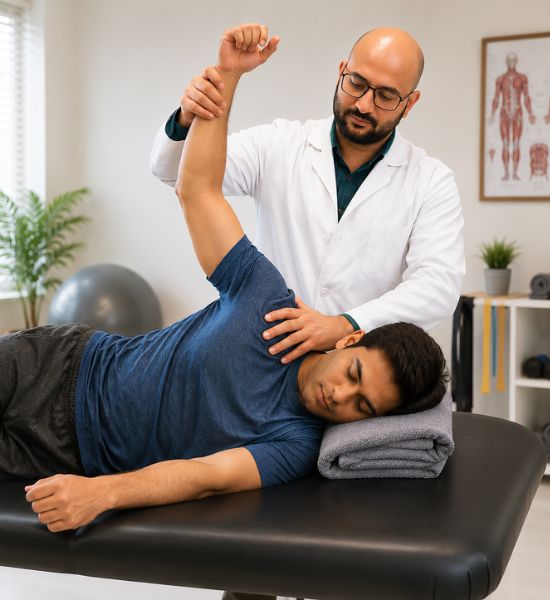
Ankle Sprain Treatment in Gurugram
While many people assume ankle sprains heal on their own, inadequate treatment often leads to chronic ankle instability, repeated injuries, and long-term mobility problems. At UM Physiotherapy, we provide evidence-based Ankle Sprain Treatment in Gurugram designed to reduce pain, restore ankle stability, improve mobility, and help patients return safely to sports and daily activities.
Under the guidance of Dr. Mohd Umar Mukhtar Qurashi, a Gold Medalist Physiotherapist, HCPC Registered Physiotherapist (United Kingdom), and Associate Team Leader – Physiotherapy at Artemis Hospital, patients receive personalized rehabilitation programs based on injury severity and activity goals.
What is an Ankle Sprain?
An Ankle Sprain occurs when one or more ankle ligaments are stretched or torn due to excessive movement.
Ligaments are strong bands of tissue that connect bones and help stabilize joints.
When the ankle rolls excessively inward or outward, the supporting ligaments may become injured.
Understanding Ankle Ligaments
The ankle contains several important ligaments that provide stability.
Lateral Ankle Ligaments
These ligaments are located on the outer side of the ankle and are the most commonly injured.
They include:
- Anterior Talofibular Ligament (ATFL)
- Calcaneofibular Ligament (CFL)
- Posterior Talofibular Ligament (PTFL)
Medial Ankle Ligaments
These ligaments support the inner side of the ankle and are injured less frequently.
Common Causes of Ankle Sprains
Sports Injuries
Common in:
- Football
- Cricket
- Basketball
- Volleyball
- Tennis
- Badminton
- Running
Landing Incorrectly
Poor landing mechanics frequently contribute to ligament injuries.
Uneven Surfaces
Walking or running on uneven ground increases injury risk.
Sudden Direction Changes
Rapid cutting and pivoting movements place stress on ankle ligaments.
Previous Ankle Injuries
Individuals with prior ankle sprains are more likely to experience future injuries.
Types of Ankle Sprains
Grade 1 Ankle Sprain
A mild ligament stretch.
Symptoms may include:
- Mild Pain
- Mild Swelling
- Minimal Loss of Function
Grade 2 Ankle Sprain
A partial ligament tear.
Symptoms often include:
- Moderate Pain
- Swelling
- Bruising
- Difficulty Walking
Grade 3 Ankle Sprain
A complete ligament tear.
Symptoms may include:
- Severe Pain
- Significant Swelling
- Instability
- Difficulty Bearing Weight
Professional rehabilitation is essential at this stage.
Symptoms of an Ankle Sprain
Common symptoms include:
Ankle Pain
Pain is usually felt around the injured ligament.
Swelling
Swelling often develops rapidly after injury.
Bruising
Discoloration may appear around the ankle and foot.
Difficulty Walking
Weight-bearing activities often become painful.
Instability
The ankle may feel weak or unstable.
Reduced Mobility
Movement may become restricted due to pain and swelling.
Why Ankle Sprains Should Not Be Ignored
Many people return to activity too quickly after an ankle injury.
This can lead to:
- Chronic Ankle Instability
- Recurrent Sprains
- Reduced Athletic Performance
- Persistent Pain
- Poor Balance
- Long-Term Joint Problems
Proper Ankle Rehabilitation helps prevent these complications.
How is an Ankle Sprain Diagnosed?
Proper assessment is essential for determining injury severity.
Evaluation may include:
Clinical Examination
Assessment of:
- Pain
- Swelling
- Stability
- Mobility
- Walking Mechanics
Functional Assessment
Evaluating balance, strength, and movement quality.
Imaging
X-rays or MRI scans may be recommended when necessary.
How Physiotherapy Helps Ankle Sprains
Ankle Sprain Physiotherapy focuses on restoring normal ankle function and preventing future injuries.
Treatment may include:
Pain Management
Reducing pain and inflammation.
Mobility Restoration
Improving ankle flexibility and movement.
Strength Development
Strengthening muscles that support the ankle.
Balance Training
Improving joint control and coordination.
Gait Training
Restoring normal walking mechanics.
Sport-Specific Rehabilitation
Preparing athletes for a safe return to sport.
Benefits of Ankle Sprain Rehabilitation
Patients often experience:
- Reduced Pain
- Better Stability
- Improved Mobility
- Faster Recovery
- Better Balance
- Reduced Risk of Re-Injury
- Improved Athletic Performance
- Greater Confidence During Activity
Our Ankle Rehabilitation Approach
Every rehabilitation program is individualized.
Treatment includes:
Comprehensive Assessment
Understanding injury severity and functional limitations.
Progressive Strengthening
Building muscular support around the ankle.
Proprioception Training
Improving balance and joint awareness.
Functional Rehabilitation
Preparing patients for daily activities and sports participation.
Return-to-Sport Progression
Helping athletes safely resume training and competition.
Why Choose Dr. Mohd Umar Mukhtar Qurashi?
Professional Credentials
- Gold Medalist in Master of Physiotherapy
- HCPC Registered Physiotherapist (United Kingdom)
- Associate Team Leader – Physiotherapy at Artemis Hospital
- 10+ Years of Clinical Experience
- Certified Dry Needling Practitioner
- Certified Functional Manipulation Specialist
Expertise Includes
- Ankle Sprain Rehabilitation
- Sports Physiotherapy
- Athlete Recovery Programs
- Sports Injury Rehabilitation
- Return-to-Sport Training
- Injury Prevention Programs
Every treatment plan is tailored to help patients recover safely and return to activity with confidence.
Recovery Timeline for Ankle Sprains
One of the most common questions patients ask is:
“How long will my ankle sprain take to heal?”
Recovery depends on several factors, including:
- Severity of the Injury
- Ligaments Involved
- Previous Ankle Injuries
- Activity Level
- Rehabilitation Compliance
- Overall Health
Grade 1 Ankle Sprain
Recovery may take:
- 1 to 3 Weeks
Patients often return to normal activities relatively quickly with proper rehabilitation.
Grade 2 Ankle Sprain
Recovery may take:
- 3 to 8 Weeks
Structured physiotherapy becomes increasingly important during this stage.
Grade 3 Ankle Sprain
Recovery may take:
- Several Months
Complete ligament tears often require extensive rehabilitation to restore stability and function.
Stages of Ankle Sprain Rehabilitation
At UM Physiotherapy, rehabilitation follows a structured progression designed to promote safe recovery.
Phase 1 – Pain and Swelling Control
The initial focus is protecting the injured ankle and managing symptoms.
Goals include:
- Reduce Pain
- Reduce Swelling
- Protect Healing Ligaments
- Improve Comfort
Phase 2 – Mobility Restoration
Once symptoms improve, attention shifts toward restoring movement.
Goals include:
- Improve Ankle Flexibility
- Restore Range of Motion
- Reduce Joint Stiffness
- Improve Walking Mechanics
Phase 3 – Strength Development
Strong muscles help support the ankle and reduce future injury risk.
Programs focus on:
- Calf Muscles
- Peroneal Muscles
- Tibialis Muscles
- Foot Stabilizers
Phase 4 – Balance and Stability Training
This stage is critical because many ankle injuries affect proprioception.
Goals include:
- Improve Balance
- Improve Joint Awareness
- Improve Stability
- Reduce Re-Injury Risk
Phase 5 – Functional Rehabilitation
Patients progress to:
- Walking
- Stair Climbing
- Running
- Jumping
- Sports Activities
Phase 6 – Return to Sport
Athletes undergo progressive sport-specific training before full return to competition.
What is Chronic Ankle Instability?
Many patients experience repeated ankle sprains after an initial injury.
This condition is called Chronic Ankle Instability.
It develops when:
- Ligaments Heal Improperly
- Balance is Not Restored
- Strength Deficits Remain
- Rehabilitation is Incomplete
Common symptoms include:
- Repeated Ankle Rolling
- Feeling of Instability
- Poor Balance
- Ongoing Discomfort
- Reduced Sports Performance
Proper Ankle Sprain Physiotherapy significantly reduces the risk of chronic instability.
Exercises Commonly Used in Ankle Rehabilitation
Exercise selection depends on injury severity and healing stage.
Range of Motion Exercises
Help restore normal ankle movement.
Calf Strengthening Exercises
Improve support and walking function.
Balance Exercises
Improve stability and joint control.
Single-Leg Training
Enhances functional ankle performance.
Resistance Band Exercises
Strengthen ankle stabilizing muscles.
Plyometric Training
Used during advanced rehabilitation for athletes.
Important: Exercises should always be progressed according to the individual’s recovery stage.
Returning to Running After an Ankle Sprain
Many active individuals are eager to resume running.
Before returning to running, patients should demonstrate:
✓ Full Ankle Mobility
✓ Minimal Swelling
✓ Good Strength
✓ Normal Walking Pattern
✓ Proper Balance
✓ Confidence During Movement
Running progression should occur gradually to avoid setbacks.
Returning to Sports After an Ankle Injury
Returning too early significantly increases the risk of re-injury.
Athletes should demonstrate:
Strength Symmetry
The injured side should perform similarly to the uninjured side.
Dynamic Balance
Good balance is essential for sports performance.
Jumping and Landing Control
Proper mechanics help protect the ankle.
Sport-Specific Readiness
Athletes should safely perform movements required by their sport.
Confidence
Psychological readiness is an important part of successful return-to-sport outcomes.
How to Prevent Future Ankle Sprains
Preventive rehabilitation is essential for long-term ankle health.
Strengthen Supporting Muscles
Strong muscles improve ankle stability.
Improve Balance
Balance training reduces injury risk.
Warm Up Properly
Prepare the body before sports participation.
Maintain Mobility
Healthy movement patterns support joint function.
Use Proper Footwear
Appropriate footwear improves support and stability.
Complete Rehabilitation
Never stop treatment simply because pain has improved.
Frequently Asked Questions About Ankle Sprain Treatment in Gurugram
1. What is an ankle sprain?
An Ankle Sprain occurs when the ligaments supporting the ankle become stretched or torn.
2. How long does an ankle sprain take to heal?
Recovery depends on injury severity and rehabilitation compliance.
3. Can physiotherapy help ankle sprains?
Yes. Ankle Sprain Physiotherapy improves mobility, strength, balance, and stability.
4. Can I walk on a sprained ankle?
This depends on injury severity. Professional assessment is recommended.
5. What causes chronic ankle instability?
Repeated injuries, incomplete healing, and insufficient rehabilitation commonly contribute.
6. Do ankle sprains heal without treatment?
Some mild sprains improve naturally, but many patients develop ongoing instability without proper rehabilitation.
7. When can I start running after an ankle sprain?
Only after adequate mobility, strength, balance, and functional recovery have been achieved.
8. Can ankle sprains happen repeatedly?
Yes. Previous ankle injuries significantly increase future injury risk.
9. Can physiotherapy prevent future ankle sprains?
Absolutely. Strengthening and balance training reduce re-injury risk.
10. When should I see a physiotherapist?
As soon as possible after injury. Early treatment often improves recovery outcomes.
Related Sports Rehabilitation Services
ACL Injury Rehabilitation in Gurugram
ACL Injury Rehabilitation in Gurugram
Expert rehabilitation for ACL tears and post-surgical recovery.
Meniscus Injury Treatment in Gurugram
Meniscus Injury Treatment in Gurugram
Comprehensive physiotherapy for knee cartilage injuries.
Runner’s Knee Treatment in Gurugram
Runner’s Knee Treatment in Gurugram
Evidence-based treatment for running-related knee pain.
Hamstring Injury Rehabilitation in Gurugram
Hamstring Injury Rehabilitation in Gurugram
Specialized recovery programs for muscle strains and tears.
Return to Sport Rehabilitation in Gurugram
Return to Sport Rehabilitation in Gurugram
Advanced athlete recovery and performance rehabilitation.
Sports Injury Rehabilitation in Gurugram
Sports Injury Rehabilitation in Gurugram
Explore our complete sports physiotherapy services.
Book Ankle Sprain Treatment in Gurugram
An ankle sprain may seem like a minor injury, but without proper rehabilitation it can affect balance, mobility, sports performance, and long-term joint health.
Receive expert Ankle Sprain Treatment in Gurugram from Dr. Mohd Umar Mukhtar Qurashi, a highly experienced sports physiotherapist dedicated to helping patients recover safely and return stronger than before.
Why Choose UM Physiotherapy?
✓ Ankle Sprain Specialists
✓ Sports Injury Rehabilitation Experts
✓ Balance & Stability Training
✓ Return-to-Sport Programs
✓ Evidence-Based Physiotherapy
✓ HCPC Registered Physiotherapist (UK)
✓ Associate Team Leader – Artemis Hospital
✓ 10+ Years of Clinical Experience
✓ Home Visit Physiotherapy Available
Schedule Your Consultation
📞 +91 87965 56680
📧 appointment@drumarmukhtar.com
📍 Sohna, Gurugram, Haryana
Start your recovery journey today with professional Ankle Sprain Physiotherapy focused on stability, strength, mobility, and long-term injury prevention.