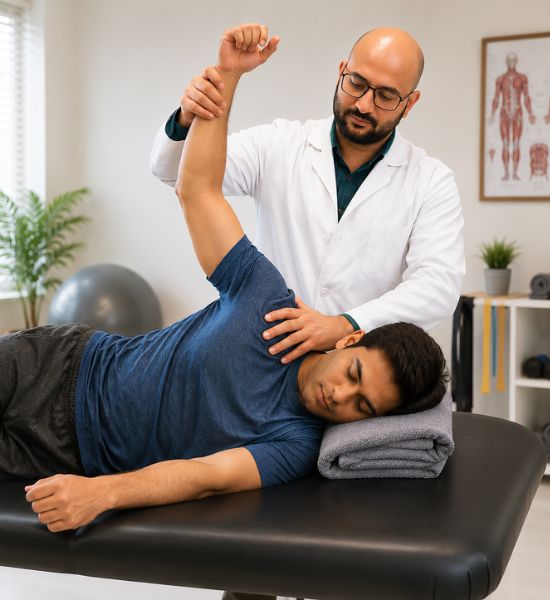
Knee Pain Treatment in Gurugram
Simple activities such as walking, climbing stairs, sitting down, standing up, exercising, or even sleeping comfortably can become difficult when knee pain persists.
At UM Physiotherapy, we provide evidence-based Knee Pain Treatment in Gurugram designed to reduce pain, improve joint function, restore mobility, and help patients return to their daily activities without limitations.
Under the guidance of Dr. Mohd Umar Mukhtar Qurashi, a Gold Medalist Physiotherapist, HCPC Registered Physiotherapist (United Kingdom), Associate Team Leader – Physiotherapy at Artemis Hospital, and a clinician with more than 10 years of advanced experience, patients receive personalized rehabilitation programs tailored to their condition and recovery goals.
Understanding the Knee Joint
The knee is one of the largest and most important joints in the human body.
It consists of:
- Bones
- Cartilage
- Meniscus
- Ligaments
- Tendons
- Muscles
These structures work together to provide:
- Stability
- Strength
- Mobility
- Shock Absorption
Because the knee bears body weight during daily activities, it is highly susceptible to injury, degeneration, and overuse problems.
Common Causes of Knee Pain
Many different conditions can cause Knee Pain.
Understanding the underlying cause is essential for successful treatment.
Knee Osteoarthritis
One of the most common causes of chronic knee pain.
Symptoms may include:
- Joint Stiffness
- Pain While Walking
- Swelling
- Difficulty Climbing Stairs
Ligament Injuries
Damage to ligaments such as:
- ACL
- PCL
- MCL
- LCL
may cause pain, instability, and reduced function.
Meniscus Injuries
The meniscus acts as a shock absorber within the knee.
Injury may cause:
- Pain
- Locking
- Clicking
- Swelling
Patellofemoral Pain Syndrome
Often called Runner’s Knee, this condition causes pain around the kneecap.
Tendon Injuries
Overuse may affect:
- Patellar Tendon
- Quadriceps Tendon
leading to pain and reduced performance.
Muscle Weakness
Weak muscles increase stress on the knee joint and contribute to pain.
Poor Biomechanics
Abnormal movement patterns can overload the knee.
Obesity and Excess Weight
Additional body weight increases stress on knee joints.
Symptoms of Knee Pain
Symptoms vary depending on the underlying condition.
Pain While Walking
Many patients notice pain during weight-bearing activities.
Difficulty Climbing Stairs
A common symptom in arthritis and patellofemoral pain.
Swelling
Inflammation may cause visible swelling around the knee.
Stiffness
Particularly noticeable after periods of inactivity.
Locking or Clicking
May indicate meniscus or cartilage involvement.
Knee Instability
Some patients feel as though the knee may “give way.”
Reduced Mobility
Joint movement may become restricted due to pain and stiffness.
Who is at Risk of Knee Pain?
Elderly Individuals
Often develop knee pain due to arthritis and age-related changes.
Athletes
Commonly experience ligament, cartilage, and overuse injuries.
Runners
Repetitive loading can contribute to knee dysfunction.
Office Workers
Sedentary lifestyles often lead to weakness and joint stiffness.
Overweight Individuals
Increased joint loading may accelerate degeneration.
Post-Surgical Patients
Require rehabilitation to restore function and mobility.
Why Knee Pain Should Not Be Ignored
Many people assume knee pain is a normal part of aging.
However, untreated knee pain may lead to:
- Reduced Mobility
- Muscle Weakness
- Joint Degeneration
- Poor Balance
- Reduced Independence
- Increased Fall Risk
Early physiotherapy intervention often improves long-term outcomes.
How Knee Pain Affects Daily Life
Persistent knee pain can interfere with:
- Walking
- Standing
- Sitting
- Exercise
- Sports
- Driving
- Household Activities
- Work Performance
Addressing knee pain early helps prevent these limitations from becoming permanent.
How Physiotherapy Helps Knee Pain
Knee Pain Physiotherapy in Gurugram focuses on treating the root cause of symptoms rather than masking pain temporarily.
Treatment may include:
Pain Management
Reducing discomfort and inflammation.
Mobility Restoration
Improving joint flexibility and movement.
Strength Development
Strengthening muscles that support the knee.
Balance Training
Improving stability and reducing fall risk.
Gait Training
Restoring healthy walking mechanics.
Functional Rehabilitation
Helping patients return to normal activities safely.
Benefits of Knee Pain Physiotherapy
Patients often experience:
✓ Reduced Pain
✓ Improved Mobility
✓ Better Joint Function
✓ Increased Strength
✓ Improved Walking Ability
✓ Better Balance
✓ Reduced Dependence on Medication
✓ Improved Quality of Life
Conditions Commonly Treated Through Knee Physiotherapy
Osteoarthritis Physiotherapy in Gurugram
Osteoarthritis Physiotherapy in Gurugram
Specialized rehabilitation for knee arthritis and joint degeneration.
Runner’s Knee Treatment in Gurugram
Runner’s Knee Treatment in Gurugram
Evidence-based treatment for pain around the kneecap.
ACL Injury Rehabilitation in Gurugram
ACL Injury Rehabilitation in Gurugram
Advanced rehabilitation for ACL tears and reconstruction recovery.
Meniscus Injury Treatment in Gurugram
Meniscus Injury Treatment in Gurugram
Comprehensive physiotherapy for cartilage injuries.
Sports Injury Rehabilitation in Gurugram
Sports Injury rehabilitation in Gurugram
Specialized recovery programs for athletes and active individuals.
Our Knee Rehabilitation Approach
At UM Physiotherapy, every patient receives an individualized treatment plan.
Detailed Assessment
Understanding the exact cause of pain.
Movement Analysis
Identifying biomechanical factors contributing to symptoms.
Progressive Strengthening
Improving muscular support around the knee.
Functional Rehabilitation
Restoring confidence and independence.
Long-Term Prevention
Reducing future injury and recurrence risk.
Why Choose Dr. Mohd Umar Mukhtar Qurashi?
Professional Credentials
- Gold Medalist in Master of Physiotherapy
- HCPC Registered Physiotherapist (United Kingdom)
- Associate Team Leader – Physiotherapy at Artemis Hospital
- 10+ Years of Clinical Experience
- Certified Dry Needling Practitioner
- Certified Functional Manipulation Specialist
Expertise Includes
- Knee Pain Physiotherapy
- Arthritis Rehabilitation
- Sports Injury Rehabilitation
- ACL Rehabilitation
- Meniscus Rehabilitation
- Joint Pain Treatment
Every rehabilitation program is designed to help patients recover safely and achieve lasting results.
Can Knee Pain Be Treated Without Surgery?
One of the most common questions patients ask is:
“Do I need surgery for my knee pain?”
The answer depends on the cause and severity of the condition.
Many cases of Knee Pain improve significantly with conservative treatment and physiotherapy.
Conditions that often respond well to physiotherapy include:
- Knee Osteoarthritis
- Runner’s Knee
- Patellofemoral Pain Syndrome
- Mild Meniscus Injuries
- Ligament Sprains
- Tendon Injuries
- Muscle Imbalances
- Chronic Knee Pain
Physiotherapy focuses on improving strength, mobility, stability, and movement patterns to reduce stress on the knee joint.
Knee Osteoarthritis vs Meniscus Injury
Many patients experience knee pain but are unsure of its cause.
Two of the most common conditions are Knee Osteoarthritis and Meniscus Injuries.
Knee Osteoarthritis
A wear-and-tear condition affecting the cartilage inside the knee joint.
Common symptoms include:
- Morning Stiffness
- Pain While Walking
- Joint Swelling
- Difficulty Climbing Stairs
- Gradual Onset of Symptoms
Meniscus Injury
A meniscus injury involves damage to the cartilage that cushions the knee.
Common symptoms include:
- Locking
- Clicking
- Sharp Pain
- Swelling
- Twisting Injury History
Why Proper Diagnosis Matters
Different knee conditions require different rehabilitation approaches.
A detailed physiotherapy assessment helps identify:
- Source of Pain
- Movement Restrictions
- Strength Deficits
- Functional Limitations
This ensures a more effective recovery plan.
Stages of Knee Rehabilitation
Successful recovery requires a structured rehabilitation program.
Phase 1 – Pain and Swelling Management
Goals include:
- Pain Reduction
- Swelling Control
- Improved Comfort
- Early Mobility
Phase 2 – Mobility Restoration
Focus Areas:
- Knee Flexibility
- Joint Mobility
- Movement Quality
- Walking Mechanics
Phase 3 – Strength Development
Treatment focuses on strengthening:
- Quadriceps
- Hamstrings
- Gluteal Muscles
- Calf Muscles
- Core Stability
Strong muscles reduce stress on the knee joint and improve function.
Phase 4 – Balance and Stability Training
This stage helps improve:
- Joint Control
- Coordination
- Balance
- Confidence During Movement
Phase 5 – Functional Rehabilitation
Patients gradually return to:
- Walking
- Stair Climbing
- Squatting
- Exercise
- Sports Activities
Best Knee Strengthening Exercises
Exercise is one of the most effective treatments for long-term knee health.
Quadriceps Strengthening
The quadriceps provide important support for the knee joint.
Benefits include:
- Improved Stability
- Better Walking Ability
- Reduced Joint Stress
Straight Leg Raises
Frequently used during early rehabilitation.
Help improve:
- Muscle Activation
- Strength
- Joint Support
Glute Strengthening Exercises
Strong glute muscles improve lower limb alignment and knee control.
Hamstring Strengthening
Supports knee stability and movement.
Step-Up Exercises
Improve functional strength and daily activity performance.
Balance Exercises
Help improve stability and reduce fall risk.
Important: Exercise selection should always be based on professional assessment and individual goals.
Recovery Timeline for Knee Pain
Recovery depends on:
- Diagnosis
- Severity
- Age
- Activity Level
- Treatment Compliance
Mild Conditions
Recovery may take:
- 2 to 6 Weeks
Moderate Conditions
Recovery may take:
- 6 to 12 Weeks
Chronic Conditions
Recovery may require:
- Several Months
Long-term conditions often require consistent rehabilitation and lifestyle modifications.
Common Mistakes That Make Knee Pain Worse
Many patients unknowingly prolong recovery.
Ignoring Symptoms
Early treatment often leads to better outcomes.
Avoiding Movement Completely
Excessive rest may contribute to weakness and stiffness.
Poor Exercise Technique
Incorrect movement patterns can increase joint stress.
Excess Body Weight
Increases loading on the knee joint.
Delaying Rehabilitation
The longer pain persists, the more difficult recovery may become.
Returning to Sports Too Early
Premature return to activity increases injury risk.
How to Prevent Knee Pain
Maintain a Healthy Weight
Reduces stress on the knee joints.
Stay Physically Active
Regular movement promotes joint health.
Strength Train Regularly
Strong muscles protect the knee.
Improve Flexibility
Healthy mobility supports efficient movement.
Use Proper Exercise Technique
Good movement mechanics reduce injury risk.
Address Pain Early
Early intervention helps prevent chronic problems.
Frequently Asked Questions About Knee Pain Treatment in Gurugram
1. What causes knee pain?
Common causes include Knee Osteoarthritis, Meniscus Injuries, Ligament Injuries, Runner’s Knee, tendon problems, and muscle weakness.
2. Can physiotherapy help knee pain?
Yes. Knee Pain Physiotherapy is one of the most effective non-surgical treatment options for improving mobility, strength, and function.
3. Can knee pain be treated without surgery?
Many knee conditions improve successfully with physiotherapy and rehabilitation.
4. What exercises are best for knee pain?
The most effective exercises depend on the diagnosis and should be prescribed individually.
5. Is walking good for knee pain?
In many cases, appropriate walking can be beneficial, but activity recommendations should be based on professional assessment.
6. Can physiotherapy help knee arthritis?
Yes. Physiotherapy is highly effective for managing pain and improving function in arthritis patients.
7. Why do my knees hurt while climbing stairs?
This may occur due to arthritis, muscle weakness, patellofemoral pain syndrome, or other knee conditions.
8. Can overweight individuals develop knee pain?
Yes. Excess body weight increases pressure on the knee joints.
9. How long does knee rehabilitation take?
Recovery varies depending on the condition and rehabilitation consistency.
10. When should I see a physiotherapist for knee pain?
You should seek professional help if pain affects walking, stairs, exercise, work, or daily activities.
Related Orthopedic Physiotherapy Services
Osteoarthritis Physiotherapy in Gurugram
Osteoarthritis Physiotherapy in Gurugram
Specialized rehabilitation for knee arthritis and age-related joint degeneration.
Joint Pain Treatment in Gurugram
Joint Pain Treatment in Gurugram
Comprehensive treatment for pain affecting multiple joints.
Post Fracture Rehabilitation in Gurugram
Post Fracture Rehabilitation in Gurugram
Restore mobility and strength following fractures and orthopedic surgery.
Runner’s Knee Treatment in Gurugram
Runner’s Knee Treatment in Gurugram
Evidence-based treatment for knee pain associated with running and sports.
Meniscus Injury Treatment in Gurugram
Meniscus Injury Treatment in Gurugram
Targeted rehabilitation for cartilage injuries and knee dysfunction.
Orthopedic Physiotherapy in Gurugram
Orthopedic Physiotherapy in Gurugram
Evidence-based treatment for musculoskeletal pain and orthopedic conditions.
Book Knee Pain Treatment in Gurugram
Knee pain should not stop you from living an active and independent life. Whether your symptoms are caused by arthritis, injury, overuse, muscle weakness, or age-related changes, physiotherapy can help you regain confidence in movement and improve your quality of life.
Receive expert Knee Pain Treatment in Gurugram from Dr. Mohd Umar Mukhtar Qurashi, a Gold Medalist Physiotherapist, HCPC Registered Physiotherapist (UK), and Associate Team Leader – Physiotherapy at Artemis Hospital.
Why Choose UM Physiotherapy?
✓ Knee Pain Specialists
✓ Arthritis Rehabilitation Experts
✓ Joint Pain Management
✓ Non-Surgical Knee Rehabilitation
✓ Evidence-Based Physiotherapy
✓ HCPC Registered Physiotherapist (UK)
✓ 10+ Years of Clinical Experience
✓ Home Physiotherapy Available
Schedule Your Consultation
📞 +91 87965 56680
📧 appointment@drumarmukhtar.com
📍 Sohna, Gurugram, Haryana
Start your recovery today with professional Knee Pain Physiotherapy in Gurugram and take the first step toward pain-free movement, stronger joints, and better mobility.