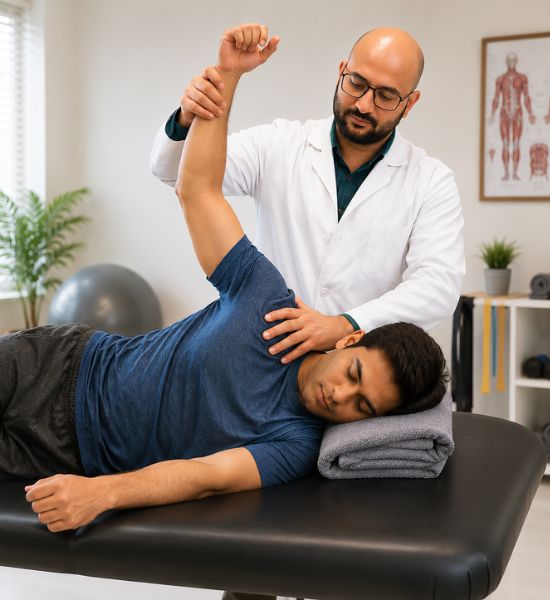
Posture Correction Therapy in Gurugram
At UM Physiotherapy, we provide evidence-based Posture Correction Therapy in Gurugram designed to improve spinal alignment, reduce pain, enhance movement, and prevent long-term musculoskeletal problems.
Under the guidance of Dr. Mohd Umar Mukhtar Qurashi, a Gold Medalist Physiotherapist and HCPC Registered Physiotherapist (United Kingdom), patients receive personalized posture rehabilitation programs focused on long-term correction and improved physical health.
What is Posture?
Posture refers to the position in which we hold our body while sitting, standing, walking, working, and performing daily activities.
Good posture allows the body to:
- Maintain proper spinal alignment
- Reduce stress on joints
- Improve muscle efficiency
- Support healthy movement patterns
- Prevent unnecessary strain
Poor posture places excessive pressure on muscles, ligaments, joints, and spinal structures.
Over time, this can lead to pain, stiffness, and dysfunction.
What is Posture Correction Therapy?
Posture Correction Therapy is a specialized physiotherapy program that helps identify and correct faulty movement patterns and body alignment issues.
The primary goals include:
- Improving spinal alignment
- Reducing pain
- Improving flexibility
- Strengthening weak muscles
- Correcting movement habits
- Preventing future injuries
Unlike temporary fixes, posture correction focuses on long-term physical improvement.
Why is Good Posture Important?
Maintaining proper posture helps reduce unnecessary stress on the body.
Benefits include:
Reduced Neck Pain
Good posture reduces strain on the cervical spine.
Reduced Back Pain
Proper spinal alignment helps distribute forces evenly throughout the spine.
Improved Breathing
Better posture allows the lungs to expand more efficiently.
Improved Balance
Good alignment improves stability and movement control.
Better Physical Performance
Muscles function more effectively when posture is optimized.
Reduced Risk of Injury
Correct movement patterns reduce excessive stress on joints and tissues.
Common Causes of Poor Posture
Several modern lifestyle factors contribute to postural problems.
Prolonged Sitting
Long hours at desks are one of the most common causes.
Mobile Phone Usage
Constant downward head positioning contributes to Tech Neck.
Work From Home Setup
Poor workstation ergonomics frequently lead to posture-related pain.
Weak Core Muscles
Weak abdominal and back muscles provide insufficient support for the spine.
Lack of Physical Activity
Reduced movement contributes to muscle imbalances and postural dysfunction.
Previous Injuries
Past injuries may alter movement patterns and posture.
Signs You May Need Posture Correction Therapy
Many people are unaware they have posture-related problems.
Common signs include:
- Neck Pain
- Back Pain
- Shoulder Pain
- Rounded Shoulders
- Forward Head Posture
- Frequent Headaches
- Muscle Tightness
- Fatigue While Sitting
- Reduced Mobility
- Poor Balance
If these symptoms occur regularly, a professional posture assessment may be beneficial.
Common Postural Problems We Treat
Forward Head Posture
One of the most common posture problems today.
The head moves forward relative to the shoulders, increasing strain on the neck and upper back.
Rounded Shoulders
Often caused by prolonged desk work and poor sitting habits.
Increased Thoracic Kyphosis
An excessive rounding of the upper back.
Lower Crossed Syndrome
A muscle imbalance affecting the pelvis and lower back.
Upper Crossed Syndrome
A common condition involving neck, shoulder, and upper back dysfunction.
Workstation-Related Postural Dysfunction
Frequently seen in office workers and remote professionals.
How Poor Posture Affects the Spine
Poor posture affects multiple areas of the body.
Cervical Spine
May contribute to:
- Neck Pain
- Tech Neck
- Cervical Spondylosis
- Headaches
Thoracic Spine
May contribute to:
- Upper Back Pain
- Rounded Shoulders
- Reduced Mobility
Lumbar Spine
May contribute to:
- Lower Back Pain
- Lumbar Spondylosis
- Muscle Tightness
- Reduced Stability
Early intervention often prevents progression and chronic symptoms.
How Physiotherapy Helps Correct Posture
Posture Correction Therapy in Gurugram focuses on identifying the root causes of poor alignment and movement dysfunction.
Treatment may include:
Detailed Postural Assessment
Evaluating spinal alignment, movement patterns, flexibility, and muscle imbalances.
Movement Analysis
Identifying faulty movement habits contributing to symptoms.
Stretching Programs
Improving flexibility in tight muscles.
Strengthening Exercises
Building support for proper posture.
Ergonomic Advice
Optimizing workstation setup and daily activities.
Movement Retraining
Teaching healthier movement and positioning strategies.
Benefits of Posture Correction Therapy
Patients often experience:
- Reduced Neck Pain
- Reduced Back Pain
- Better Mobility
- Improved Flexibility
- Improved Balance
- Better Breathing
- Improved Work Performance
- Enhanced Confidence
- Reduced Headaches
- Better Long-Term Spinal Health
Why Choose Dr. Mohd Umar Mukhtar Qurashi?
Professional Credentials
- Gold Medalist in Master of Physiotherapy
- HCPC Registered Physiotherapist (United Kingdom)
- Associate Team Leader – Physiotherapy at Artemis Hospital
- More Than 10 Years of Clinical Experience
- Certified Dry Needling Practitioner
- Certified Functional Manipulation Specialist
Expertise Includes
- Posture Correction Therapy
- Back Pain Physiotherapy
- Neck Pain Physiotherapy
- Spine Rehabilitation
- Cervical Spondylosis Treatment
- Lumbar Spondylosis Treatment
- Sports Injury Rehabilitation
Every posture correction program is customized according to the patient’s needs, lifestyle, and rehabilitation goals.
Understanding Forward Head Posture
One of the most common posture problems seen today is Forward Head Posture.
This occurs when the head moves forward in relation to the shoulders instead of remaining aligned over the spine.
For every few centimeters the head moves forward, the load on the neck increases significantly.
Common causes include:
- Mobile Phone Usage
- Laptop Work
- Poor Desk Ergonomics
- Long Working Hours
- Lack of Postural Awareness
Symptoms of Forward Head Posture
- Neck Pain
- Headaches
- Shoulder Pain
- Upper Back Pain
- Reduced Neck Mobility
- Muscle Tightness
- Fatigue While Working
Without correction, Forward Head Posture may contribute to chronic cervical spine problems.
What is Upper Crossed Syndrome?
Upper Crossed Syndrome is a common muscle imbalance affecting the neck, shoulders, and upper back.
It is frequently seen in:
- Office Workers
- IT Professionals
- Students
- Drivers
- Work From Home Employees
Muscles That Become Tight
- Upper Trapezius
- Levator Scapulae
- Chest Muscles
Muscles That Become Weak
- Deep Neck Flexors
- Lower Trapezius
- Rhomboids
Common Symptoms
- Rounded Shoulders
- Forward Head Posture
- Neck Pain
- Shoulder Pain
- Headaches
- Upper Back Stiffness
Posture Correction Therapy in Gurugram helps restore muscular balance and improve spinal alignment.
What is Lower Crossed Syndrome?
Lower Crossed Syndrome affects the lower back, pelvis, and hips.
It develops when certain muscles become tight while others become weak.
Tight Muscles
- Hip Flexors
- Lower Back Muscles
Weak Muscles
- Core Muscles
- Gluteal Muscles
Common Symptoms
- Lower Back Pain
- Poor Posture
- Pelvic Misalignment
- Reduced Stability
- Difficulty Standing for Long Periods
This condition is commonly associated with sedentary lifestyles and prolonged sitting.
Our Posture Assessment Process
At UM Physiotherapy, every posture correction program begins with a comprehensive assessment.
Postural Evaluation
We analyze:
- Head Position
- Shoulder Alignment
- Spinal Curves
- Pelvic Position
- Standing Posture
- Sitting Posture
Movement Assessment
We evaluate how your body moves during:
- Walking
- Sitting
- Standing
- Bending
- Reaching
- Lifting
Muscle Assessment
Identifying:
- Weak Muscles
- Tight Muscles
- Movement Restrictions
- Stability Deficits
Functional Assessment
Understanding how posture affects:
- Work Performance
- Daily Activities
- Exercise
- Sports Participation
The assessment helps create a personalized treatment strategy.
Posture Correction Exercises
Exercise is one of the most important components of Posture Correction Therapy.
Chin Tuck Exercises
Helps improve Forward Head Posture and strengthen deep neck muscles.
Scapular Retraction Exercises
Improves shoulder positioning and upper back stability.
Thoracic Mobility Exercises
Enhances upper back flexibility and movement.
Core Strengthening Exercises
Provides better support for the spine and pelvis.
Hip Strengthening Exercises
Improves lower body stability and posture.
Stretching Programs
Helps release tight muscles contributing to poor alignment.
Important: Exercise selection should always be individualized based on assessment findings.
How Long Does Posture Correction Take?
This is one of the most common questions patients ask.
The answer depends on:
- Severity of Postural Dysfunction
- Duration of the Problem
- Age
- Activity Levels
- Consistency with Exercises
- Workplace Habits
Many patients begin noticing improvements within a few weeks, while long-standing postural problems may require longer rehabilitation programs.
How to Maintain Good Posture Every Day
Successful posture correction requires long-term lifestyle changes.
Keep Screens at Eye Level
Avoid constantly looking down at devices.
Use Proper Chair Support
Choose a chair that supports natural spinal alignment.
Take Frequent Breaks
Stand, stretch, and move every 30–45 minutes.
Stay Physically Active
Regular movement helps maintain muscular balance.
Strengthen Your Core
Strong core muscles provide essential spinal support.
Be Aware of Your Posture
Postural awareness is one of the most effective prevention strategies.
Frequently Asked Questions About Posture Correction Therapy in Gurugram
1. Can physiotherapy correct poor posture?
Yes. Posture Correction Therapy helps improve alignment, movement patterns, flexibility, and muscular balance.
2. What causes poor posture?
Common causes include prolonged sitting, mobile phone use, poor workstation setup, muscle weakness, and sedentary lifestyles.
3. Can poor posture cause neck pain?
Yes. Poor posture is one of the leading causes of Neck Pain and cervical dysfunction.
4. Can poor posture cause back pain?
Absolutely. Poor alignment increases stress on spinal structures and contributes to Back Pain.
5. How long does posture correction take?
Recovery time varies depending on severity, consistency, and individual factors.
6. Is posture correction permanent?
Results can be maintained through regular exercise, awareness, and healthy movement habits.
7. Can posture correction help headaches?
Yes. Many headaches are linked to neck and postural dysfunction.
8. Can posture correction improve breathing?
Proper posture often improves chest expansion and breathing efficiency.
9. Do office workers need posture correction therapy?
Office workers are among the most common groups benefiting from posture rehabilitation.
10. When should I see a physiotherapist for posture problems?
You should seek professional help if posture-related symptoms affect work, comfort, mobility, or quality of life.
Related Spine Rehabilitation Services
Neck Pain Physiotherapy in Gurugram
Neck Pain Physiotherapy in Gurugram
Expert treatment for neck pain, stiffness, and posture-related dysfunction.
Cervical Spondylosis Treatment in Gurugram
Cervical Spondylosis Treatment in Gurugram
Specialized rehabilitation for degenerative cervical spine conditions.
Lumbar Spondylosis Treatment in Gurugram
Lumbar Spondylosis Treatment in Gurugram
Evidence-based treatment for lower back degeneration and stiffness.
Chronic Back Pain Treatment in Gurugram
Chronic Back Pain Treatment in Gurugram
Comprehensive rehabilitation for persistent spinal pain.
Back Pain Physiotherapy in Gurugram
Back Pain Physiotherapy in Gurugram
Explore our complete spine rehabilitation services.
Book Posture Correction Therapy in Gurugram
Poor posture doesn’t just affect how you look—it affects how you move, work, feel, and perform every day.
Receive expert Posture Correction Therapy in Gurugram from Dr. Mohd Umar Mukhtar Qurashi and learn how proper alignment can help reduce pain, improve mobility, and enhance long-term spinal health.
Why Choose UM Physiotherapy?
✓ Posture Correction Specialists
✓ Neck & Back Pain Experts
✓ Forward Head Posture Treatment
✓ Upper Crossed Syndrome Rehabilitation
✓ Evidence-Based Physiotherapy
✓ HCPC Registered Physiotherapist (UK)
✓ 10+ Years of Clinical Experience
✓ Home Visit Physiotherapy Available
Schedule Your Consultation
📞 +91 87965 56680
📧 appointment@drumarmukhtar.com
📍 Sohna, Gurugram, Haryana
Take the first step toward better posture, better movement, and a healthier spine today.