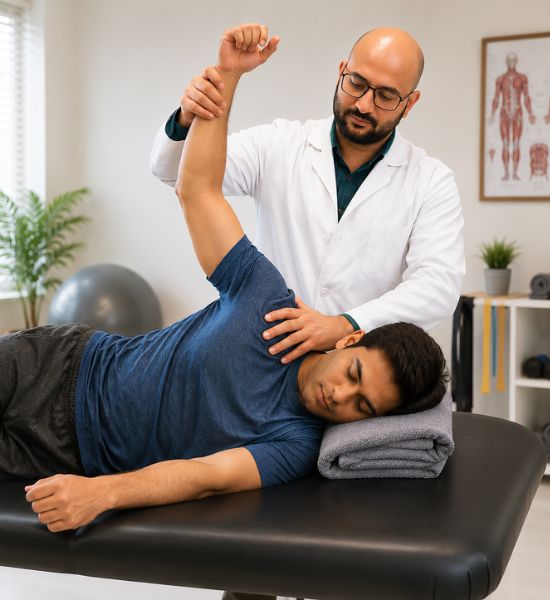
Tennis Elbow Treatment in Gurugram
Despite its name, Tennis Elbow affects far more than tennis players. Office workers, computer users, gym enthusiasts, manual laborers, mechanics, carpenters, and individuals performing repetitive hand movements frequently develop this condition.
At UM Physiotherapy, we provide evidence-based Tennis Elbow Treatment in Gurugram designed to reduce pain, restore strength, improve function, and help patients return to work, sports, and daily activities.
Under the guidance of Dr. Mohd Umar Mukhtar Qurashi, a Gold Medalist Physiotherapist, HCPC Registered Physiotherapist (United Kingdom), and Associate Team Leader – Physiotherapy at Artemis Hospital, patients receive personalized rehabilitation programs focused on long-term recovery and injury prevention.
What is Tennis Elbow?
Tennis Elbow, medically known as Lateral Epicondylitis, is a condition affecting the tendons that attach to the outer part of the elbow.
These tendons help control:
- Wrist Movement
- Grip Strength
- Hand Function
- Forearm Movement
Repeated stress and overuse can cause tendon irritation, degeneration, and pain.
Understanding the Elbow Joint
The elbow is a complex joint involving:
- Bones
- Muscles
- Tendons
- Ligaments
- Nerves
The muscles of the forearm connect to the elbow through tendons.
When these tendons are repeatedly overloaded, symptoms of Tennis Elbow may develop.
What Causes Tennis Elbow?
Repetitive Hand Movements
One of the most common causes.
Examples include:
- Typing
- Mouse Usage
- Writing
- Tool Handling
- Repetitive Lifting
Racquet Sports
Activities such as:
- Tennis
- Badminton
- Squash
- Pickleball
may increase stress on the elbow tendons.
Gym Training
Improper lifting techniques often contribute to tendon overload.
Occupational Activities
Common among:
- Electricians
- Plumbers
- Carpenters
- Mechanics
- Construction Workers
Poor Biomechanics
Incorrect movement patterns increase tendon stress.
Sudden Increase in Activity
Rapid increases in workload can overload tissues.
Common Symptoms of Tennis Elbow
Pain on the Outside of the Elbow
The most common symptom.
Pain While Gripping
Activities such as carrying bags or shaking hands may become painful.
Forearm Pain
Pain may spread down the forearm.
Reduced Grip Strength
Many patients notice weakness during lifting or gripping.
Pain During Exercise
Gym activities often aggravate symptoms.
Difficulty Performing Daily Tasks
Simple activities may become uncomfortable.
Who is at Risk of Tennis Elbow?
Higher-risk groups include:
- Office Workers
- Computer Users
- Athletes
- Tennis Players
- Badminton Players
- Gym Enthusiasts
- Manual Laborers
- Mechanics
- Electricians
- Carpenters
Tennis Elbow vs Golfer’s Elbow
Many patients confuse these two conditions.
Tennis Elbow
Pain occurs on the outer side of the elbow.
Golfer’s Elbow
Pain occurs on the inner side of the elbow.
Learn More: Golfer’s Elbow Treatment
How is Tennis Elbow Diagnosed?
Clinical Examination
Assessment includes:
- Pain Location
- Grip Strength
- Elbow Mobility
- Functional Activities
- Movement Quality
Functional Assessment
Evaluating how symptoms affect work, sports, and daily life.
Imaging
In certain cases, imaging may be recommended to assess tendon health.
Can Tennis Elbow Heal Without Surgery?
The vast majority of Tennis Elbow cases improve without surgery.
Many patients respond very well to:
- Physiotherapy
- Activity Modification
- Progressive Strengthening
- Movement Correction
- Load Management
Early intervention often improves outcomes significantly.
How Physiotherapy Helps Tennis Elbow
Tennis Elbow Physiotherapy in Gurugram focuses on reducing tendon stress while restoring function.
Treatment may include:
Pain Management
Reducing irritation and improving comfort.
Tendon Loading Programs
Helping tendons adapt and recover.
Strength Development
Improving forearm and grip strength.
Movement Correction
Addressing faulty movement patterns.
Functional Rehabilitation
Preparing patients for work, sports, and daily activities.
Benefits of Tennis Elbow Rehabilitation
Patients often experience:
- Reduced Pain
- Better Grip Strength
- Improved Function
- Improved Work Performance
- Better Sports Participation
- Reduced Re-Injury Risk
- Enhanced Quality of Life
Our Tennis Elbow Rehabilitation Approach
Every rehabilitation program is individualized.
Comprehensive Assessment
Understanding symptoms and contributing factors.
Progressive Strengthening
Improving tendon capacity and strength.
Load Management
Helping patients return safely to activity.
Functional Rehabilitation
Restoring confidence and performance.
Long-Term Prevention
Reducing future injury risk.
Why Choose Dr. Mohd Umar Mukhtar Qurashi?
Professional Credentials
- Gold Medalist in Master of Physiotherapy
- HCPC Registered Physiotherapist (United Kingdom)
- Associate Team Leader – Physiotherapy at Artemis Hospital
- 10+ Years of Clinical Experience
- Certified Dry Needling Practitioner
- Certified Functional Manipulation Specialist
Expertise Includes
- Tennis Elbow Treatment
- Sports Injury Rehabilitation
- Upper Limb Rehabilitation
- Shoulder & Elbow Physiotherapy
- Athlete Recovery Programs
- Return-to-Sport Rehabilitation
Every treatment plan is customized to help patients recover efficiently and achieve long-term results.
Recovery Timeline for Tennis Elbow
One of the most common questions patients ask is:
“How long does Tennis Elbow take to heal?”
Recovery depends on several factors:
- Duration of Symptoms
- Severity of Tendon Damage
- Occupation
- Activity Level
- Compliance with Rehabilitation
- Work and Sports Demands
Mild Tennis Elbow
Recovery may take:
- 4 to 8 Weeks
Especially when symptoms are identified and treated early.
Moderate Tennis Elbow
Recovery may take:
- 2 to 4 Months
Structured rehabilitation becomes essential at this stage.
Chronic Tennis Elbow
Recovery may take:
- Several Months
Long-standing tendon problems often require progressive strengthening and load management.
Stages of Tennis Elbow Rehabilitation
At UM Physiotherapy, rehabilitation follows an evidence-based progression.
Phase 1 – Pain Reduction
Initial treatment focuses on:
- Pain Control
- Reducing Tendon Irritation
- Activity Modification
- Protecting Healing Tissues
Phase 2 – Restore Mobility
Goals include:
- Improve Elbow Mobility
- Improve Wrist Mobility
- Reduce Muscle Tightness
- Improve Movement Quality
Phase 3 – Tendon Strengthening
This is one of the most important phases.
Treatment focuses on:
- Tendon Loading
- Forearm Strengthening
- Grip Strength Development
- Muscle Endurance
Phase 4 – Functional Training
Patients gradually return to:
- Work Activities
- Gym Training
- Sports Participation
- Daily Tasks
Phase 5 – Return to Full Activity
The final stage focuses on restoring confidence, performance, and preventing recurrence.
Tennis Elbow vs Nerve Pain
Many patients mistake nerve-related symptoms for Tennis Elbow.
Tennis Elbow Symptoms
Typically include:
- Pain on the Outer Elbow
- Pain During Gripping
- Pain During Lifting
- Forearm Discomfort
- Reduced Grip Strength
Nerve-Related Symptoms
May include:
- Tingling
- Numbness
- Burning Sensations
- Pain Radiating into the Hand
- Weakness
A professional physiotherapy assessment helps determine the exact source of symptoms.
Exercises Commonly Used for Tennis Elbow Rehabilitation
Exercise is the cornerstone of successful tendon rehabilitation.
Wrist Extension Exercises
Help strengthen the affected tendon.
Eccentric Strengthening Exercises
Widely used in tendon rehabilitation programs.
Grip Strength Exercises
Improve hand and forearm function.
Forearm Stretching
Helps improve flexibility and reduce tension.
Resistance Band Training
Develops strength progressively.
Functional Strength Training
Prepares patients for occupational and sports activities.
Important: Exercise progression should always be based on symptoms and individual assessment findings.
Common Mistakes That Make Tennis Elbow Worse
Many patients unintentionally delay recovery.
Ignoring Early Symptoms
Early treatment often results in faster recovery.
Continuing Painful Activities
Repeated tendon overload can worsen symptoms.
Poor Ergonomics
Improper workstation setup often contributes to recurring symptoms.
Excessive Rest
Complete inactivity may slow tendon recovery.
Returning to Sports Too Early
Premature return to activity increases re-injury risk.
Self-Treatment Without Assessment
Incorrect exercise selection may aggravate symptoms.
How to Prevent Tennis Elbow
Prevention strategies help reduce the likelihood of recurrence.
Improve Grip Strength
Strong forearm muscles help tolerate daily demands.
Use Proper Technique
Correct movement mechanics reduce tendon stress.
Warm Up Before Activity
Prepare muscles and tendons before sports or exercise.
Improve Workplace Ergonomics
Proper workstation setup helps reduce repetitive strain.
Progress Training Gradually
Avoid sudden increases in activity volume.
Address Minor Symptoms Early
Small issues are easier to manage than chronic tendon problems.
Frequently Asked Questions About Tennis Elbow Treatment in Gurugram
1. What is Tennis Elbow?
Tennis Elbow is a tendon-related condition affecting the outer side of the elbow, often caused by repetitive movements and overuse.
2. Do I need to play tennis to get Tennis Elbow?
No. Most patients with Tennis Elbow have never played tennis.
3. Can physiotherapy help Tennis Elbow?
Yes. Tennis Elbow Physiotherapy is one of the most effective treatment approaches for reducing pain and restoring function.
4. How long does Tennis Elbow take to heal?
Recovery varies depending on symptom severity and rehabilitation consistency.
5. Is surgery necessary for Tennis Elbow?
Most patients recover successfully without surgery.
6. Can gym training cause Tennis Elbow?
Yes. Improper lifting techniques and excessive loading can contribute to tendon irritation.
7. Why is my grip strength weak?
Pain and tendon dysfunction often reduce grip strength.
8. Can office workers get Tennis Elbow?
Absolutely. Repetitive computer and mouse use may contribute to symptoms.
9. What exercises help Tennis Elbow?
The most effective exercises depend on symptom severity and should be prescribed individually.
10. When should I see a physiotherapist?
If elbow pain persists, affects work, sports, or daily activities, professional assessment is recommended.
Related Physiotherapy Services
Golfer’s Elbow Treatment in Gurugram
Golfer’s Elbow Treatment in Gurugram
Specialized treatment for inner elbow pain and tendon injuries.
Shoulder Pain Physiotherapy in Gurugram
Shoulder Pain Physiotherapy in Gurugram
Comprehensive rehabilitation for shoulder pain and movement dysfunction.
Rotator Cuff Injury Rehabilitation in Gurugram
Rotator Cuff Injury Rehabilitation in Gurugram
Evidence-based treatment for shoulder tendon injuries.
Sports Injury Rehabilitation in Gurugram
Sports Injury Rehabilitation in Gurugram
Complete sports physiotherapy programs for athletes and active individuals.
Return to Sport Rehabilitation in Gurugram
Return to Sport Rehabilitation in Gurugram
Advanced athlete recovery and performance rehabilitation.
Book Tennis Elbow Treatment in Gurugram
Tennis Elbow can affect your work, exercise routine, sports performance, and everyday activities. The right physiotherapy program can help reduce pain, restore strength, and prevent recurring symptoms.
Receive expert Tennis Elbow Treatment in Gurugram from Dr. Mohd Umar Mukhtar Qurashi, an experienced physiotherapist specializing in sports injuries, tendon rehabilitation, and upper limb recovery.
Why Choose UM Physiotherapy?
✓ Tennis Elbow Specialists
✓ Elbow Pain Experts
✓ Sports Injury Rehabilitation
✓ Tendon Rehabilitation Programs
✓ Evidence-Based Physiotherapy
✓ HCPC Registered Physiotherapist (UK)
✓ Associate Team Leader – Artemis Hospital
✓ 10+ Years of Clinical Experience
✓ Home Visit Physiotherapy Available
Schedule Your Consultation
📞 +91 87965 56680
📧 appointment@drumarmukhtar.com
📍 Sohna, Gurugram, Haryana
Start your recovery today with professional Tennis Elbow Physiotherapy focused on pain relief, strength restoration, and long-term tendon health.