Rotator Cuff Injury Rehabilitation in Gurugram
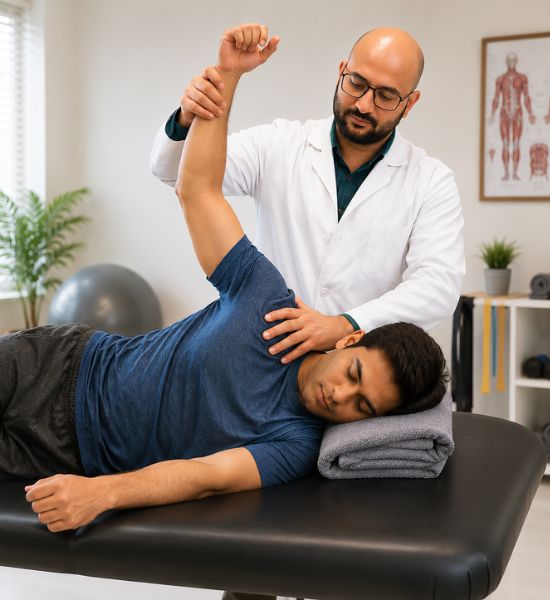
At UM Physiotherapy, we provide evidence-based Rotator Cuff Injury Rehabilitation in Gurugram designed to reduce pain, restore shoulder function, improve strength, and help patients safely return to work, sports, and daily life.
Under the guidance of Dr. Mohd Umar Mukhtar Qurashi, a Gold Medalist Physiotherapist, HCPC Registered Physiotherapist (United Kingdom), and Associate Team Leader – Physiotherapy at Artemis Hospital, patients receive personalized rehabilitation programs tailored to their condition and recovery goals.
What is the Rotator Cuff?
The Rotator Cuff is a group of four muscles and their tendons that surround the shoulder joint.
These muscles include:
Supraspinatus
Helps lift the arm away from the body.
Infraspinatus
Assists with external shoulder rotation.
Teres Minor
Supports shoulder stability and movement.
Subscapularis
Helps rotate the arm inward and stabilize the shoulder.
Together, these muscles:
- Stabilize the Shoulder Joint
- Control Arm Movement
- Support Overhead Activities
- Improve Athletic Performance
- Protect the Shoulder During Daily Activities
What is a Rotator Cuff Injury?
A Rotator Cuff Injury occurs when one or more rotator cuff tendons become irritated, inflamed, weakened, or torn.
The injury may range from mild tendon irritation to a complete tendon tear.
Common Causes of Rotator Cuff Injuries
Sports Activities
Common in:
- Cricket
- Tennis
- Badminton
- Swimming
- Volleyball
- Baseball
- Gym Training
Repetitive Overhead Movements
Repeated overhead activities place stress on shoulder tendons.
Poor Posture
Rounded shoulders and forward head posture often contribute to rotator cuff dysfunction.
Age-Related Degeneration
Tendons naturally become more vulnerable with age.
Sudden Trauma
Falls or direct impact injuries can damage the rotator cuff.
Muscle Imbalances
Weak shoulder stabilizers may increase injury risk.
Types of Rotator Cuff Injuries
Rotator Cuff Tendinitis
Inflammation and irritation of the tendon.
Rotator Cuff Tendinopathy
Degenerative changes within the tendon.
Partial Thickness Tear
The tendon is partially damaged but remains attached.
Full Thickness Tear
A complete tear through the tendon.
Massive Rotator Cuff Tear
Severe injury involving significant tendon damage.
Symptoms of a Rotator Cuff Injury
Shoulder Pain
Usually felt on the outer side of the shoulder.
Pain While Lifting the Arm
Especially during overhead activities.
Shoulder Weakness
Difficulty carrying or lifting objects.
Night Pain
Many patients experience pain while sleeping.
Reduced Range of Motion
Movement becomes painful and restricted.
Clicking or Catching Sensations
Some patients notice abnormal shoulder movement.
Who is at Risk of Rotator Cuff Injuries?
Higher-risk groups include:
- Athletes
- Swimmers
- Tennis Players
- Cricketers
- Badminton Players
- Gym Enthusiasts
- Manual Laborers
- Office Workers with Poor Posture
- Adults Over 40
How is a Rotator Cuff Injury Diagnosed?
Clinical Examination
Assessment includes:
- Shoulder Strength
- Movement Quality
- Mobility
- Functional Limitations
- Pain Patterns
Functional Assessment
Evaluating daily activities and sports-related movement.
Imaging
MRI or Ultrasound imaging may be recommended when necessary.
Can Rotator Cuff Injuries Heal Without Surgery?
Many patients improve significantly without surgery.
Non-surgical treatment may be appropriate when:
- Symptoms are Mild to Moderate
- The Tear is Partial
- Functional Limitations are Manageable
- Strength Can Be Restored Through Rehabilitation
Many patients achieve excellent outcomes through Rotator Cuff Physiotherapy.
How Physiotherapy Helps Rotator Cuff Injuries
Rotator Cuff Injury Rehabilitation in Gurugram focuses on restoring normal shoulder function and reducing pain.
Treatment may include:
Pain Management
Reducing irritation and improving comfort.
Mobility Restoration
Improving shoulder flexibility and movement.
Strength Development
Strengthening:
- Rotator Cuff Muscles
- Scapular Stabilizers
- Upper Back Muscles
- Core Muscles
Posture Correction
Addressing contributing postural dysfunction.
Functional Rehabilitation
Preparing patients for work, exercise, and sports activities.
Benefits of Rotator Cuff Rehabilitation
Patients frequently experience:
- Reduced Pain
- Improved Mobility
- Better Strength
- Better Sleep
- Improved Shoulder Stability
- Improved Athletic Performance
- Reduced Re-Injury Risk
- Enhanced Quality of Life
Our Rotator Cuff Rehabilitation Approach
Every treatment plan is customized.
Detailed Assessment
Identifying movement restrictions and functional limitations.
Progressive Strength Training
Restoring shoulder stability and performance.
Mobility Training
Improving joint movement and flexibility.
Functional Rehabilitation
Preparing patients for daily activities and sports.
Long-Term Prevention
Reducing the likelihood of future shoulder injuries.
Why Choose Dr. Mohd Umar Mukhtar Qurashi?
Professional Credentials
- Gold Medalist in Master of Physiotherapy
- HCPC Registered Physiotherapist (United Kingdom)
- Associate Team Leader – Physiotherapy at Artemis Hospital
- 10+ Years of Clinical Experience
- Certified Dry Needling Practitioner
- Certified Functional Manipulation Specialist
Expertise Includes
- Rotator Cuff Rehabilitation
- Shoulder Pain Physiotherapy
- Sports Injury Rehabilitation
- Athlete Recovery Programs
- Postural Dysfunction Treatment
- Return-to-Sport Rehabilitation
Every rehabilitation plan is designed to help patients regain strength, mobility, confidence, and long-term shoulder health.
Rotator Cuff Tear vs Frozen Shoulder
Many patients experience shoulder pain and assume they have a rotator cuff injury when they may actually be suffering from Frozen Shoulder.
Although both conditions affect shoulder movement, their causes and rehabilitation approaches are very different.
Rotator Cuff Injury
A Rotator Cuff Injury affects the muscles and tendons that stabilize the shoulder.
Common symptoms include:
- Pain While Lifting the Arm
- Shoulder Weakness
- Pain During Sports Activities
- Pain While Reaching Overhead
- Difficulty Carrying Objects
Frozen Shoulder
Frozen Shoulder affects the joint capsule surrounding the shoulder.
Common symptoms include:
- Severe Stiffness
- Progressive Loss of Motion
- Difficulty Reaching Behind the Back
- Pain at Rest
- Difficulty Sleeping
Key Difference
Patients with a rotator cuff injury often have weakness and pain.
Patients with frozen shoulder usually have severe stiffness and significant movement restrictions.
A proper physiotherapy assessment helps determine the exact cause of shoulder symptoms.
Rotator Cuff Surgery vs Physiotherapy
One of the most common questions patients ask is:
“Do I need surgery for my rotator cuff injury?”
The answer depends on:
- Injury Severity
- Tear Size
- Age
- Activity Level
- Functional Limitations
- Recovery Goals
When Physiotherapy May Be Appropriate
Many patients improve significantly without surgery.
Physiotherapy may be recommended when:
- The Tear is Partial
- Symptoms are Mild to Moderate
- Daily Activities Remain Manageable
- Strength Can Be Improved Conservatively
Many individuals achieve excellent results through Rotator Cuff Physiotherapy.
When Surgery May Be Recommended
Surgical consultation may be considered if:
- A Large Tear is Present
- Significant Weakness Exists
- Conservative Treatment Fails
- Functional Limitations are Severe
- Athletic Demands Require Surgical Repair
Even after surgery, physiotherapy is essential for successful recovery.
Recovery Timeline for Rotator Cuff Injuries
Recovery varies depending on the severity of the injury.
Early Recovery Phase (Weeks 1–4)
Focus Areas:
- Pain Reduction
- Mobility Improvement
- Inflammation Management
- Protection of Healing Structures
Strength Recovery Phase (Weeks 4–12)
Focus Areas:
- Strength Development
- Improved Movement Quality
- Better Shoulder Stability
- Functional Improvement
Advanced Rehabilitation Phase (Months 3–6)
Focus Areas:
- Dynamic Strength
- Sports Rehabilitation
- Functional Activities
- Return to Exercise
Return-to-Sport Phase
Athletes gradually progress to full sports participation after meeting specific performance criteria.
Stages of Rotator Cuff Rehabilitation
At UM Physiotherapy, rehabilitation follows a structured progression.
Phase 1 – Pain and Inflammation Control
Goals include:
- Pain Reduction
- Tissue Protection
- Early Mobility
- Improved Comfort
Phase 2 – Mobility Restoration
Treatment focuses on:
- Restoring Shoulder Motion
- Improving Flexibility
- Reducing Stiffness
- Improving Joint Mechanics
Phase 3 – Strength Development
Programs target:
- Rotator Cuff Muscles
- Scapular Stabilizers
- Upper Back Muscles
- Core Muscles
Phase 4 – Functional Training
Preparing patients for:
- Daily Activities
- Gym Training
- Occupational Demands
- Recreational Activities
Phase 5 – Sports Rehabilitation
Athletes progress toward:
- Throwing Activities
- Overhead Movements
- Strength Demands
- Sports-Specific Skills
Exercises Commonly Used for Rotator Cuff Rehabilitation
Exercise selection depends on injury severity and rehabilitation stage.
Pendulum Exercises
Frequently used during early rehabilitation.
Shoulder Mobility Exercises
Improve flexibility and movement quality.
Isometric Strengthening
Helps activate muscles without excessive joint stress.
Resistance Band Exercises
Develop strength progressively and safely.
Scapular Stabilization Exercises
Improve shoulder mechanics and posture.
Functional Strength Training
Prepares patients for real-world activities and sports participation.
Important: Exercise progression should always be guided by a qualified physiotherapist.
Returning to Sports After a Rotator Cuff Injury
Athletes should not return to sports solely because pain has improved.
Successful return-to-sport decisions should consider:
Strength Recovery
Adequate shoulder strength is essential.
Movement Quality
The shoulder should move efficiently and pain-free.
Functional Performance
Athletes should tolerate sport-specific activities.
Endurance
The shoulder must withstand repeated activity.
Confidence
Mental readiness is an important part of recovery.
How to Prevent Rotator Cuff Injuries
Many shoulder injuries can be prevented through proper training and conditioning.
Maintain Good Posture
Poor posture increases stress on shoulder structures.
Strengthen the Rotator Cuff
Strong muscles improve stability and injury resistance.
Improve Shoulder Mobility
Healthy movement patterns reduce excessive stress.
Warm Up Properly
Preparation before activity reduces injury risk.
Progress Training Gradually
Avoid sudden increases in workload.
Address Minor Pain Early
Small problems are easier to manage than major injuries.
Frequently Asked Questions About Rotator Cuff Injury Rehabilitation in Gurugram
1. What is a rotator cuff injury?
A Rotator Cuff Injury involves damage to the muscles or tendons responsible for shoulder stability and movement.
2. Can rotator cuff injuries heal without surgery?
Many partial tears and tendon injuries improve significantly with physiotherapy.
3. How long does rotator cuff rehabilitation take?
Recovery depends on injury severity, treatment approach, and rehabilitation compliance.
4. Is physiotherapy necessary after rotator cuff surgery?
Yes. Physiotherapy is essential for restoring movement, strength, and shoulder function.
5. Why does my shoulder hurt at night?
Night pain is common in many rotator cuff conditions due to tendon irritation and inflammation.
6. Can athletes return to sports after a rotator cuff injury?
Yes. Many athletes successfully return to sports following structured rehabilitation.
7. What exercises help rotator cuff injuries?
Exercise selection depends on the injury and rehabilitation stage and should be prescribed individually.
8. Can poor posture contribute to rotator cuff problems?
Yes. Poor posture often affects shoulder mechanics and increases injury risk.
9. How can I prevent shoulder injuries?
Strength training, mobility work, proper technique, and gradual progression can help reduce injury risk.
10. When should I see a physiotherapist?
You should seek professional assessment if shoulder pain affects daily activities, work, sleep, or sports participation.
Related Sports Rehabilitation Services
Shoulder Pain Physiotherapy in Gurugram
Shoulder Pain Physiotherapy in Gurugram
Comprehensive treatment for shoulder pain, stiffness, and mobility limitations.
Sports Injury Rehabilitation in Gurugram
Sports Injury Rehabilitation in Gurugram
Specialized recovery programs for athletes and active individuals.
Tennis Elbow Treatment in Gurugram
Tennis Elbow Treatment in Gurugram
Evidence-based rehabilitation for elbow pain and overuse injuries.
Posture Correction Therapy in Gurugram
Posture Correction Therapy in Gurugram
Improve posture and reduce stress on the shoulders and upper back.
Return to Sport Rehabilitation in Gurugram
Return to Sport Rehabilitation in Gurugram
Performance-focused rehabilitation for athletes returning to competition.
Book Rotator Cuff Injury Rehabilitation in Gurugram
A rotator cuff injury can affect your work, exercise routine, sleep, and overall quality of life. The right rehabilitation program can help restore strength, reduce pain, and improve shoulder performance.
Receive expert Rotator Cuff Injury Rehabilitation in Gurugram from Dr. Mohd Umar Mukhtar Qurashi, a highly experienced physiotherapist specializing in shoulder rehabilitation, sports injuries, and movement recovery.
Why Choose UM Physiotherapy?
✓ Rotator Cuff Rehabilitation Specialists
✓ Shoulder Injury Experts
✓ Sports Physiotherapy Programs
✓ Post-Surgical Recovery Support
✓ Return-to-Sport Rehabilitation
✓ Evidence-Based Physiotherapy
✓ HCPC Registered Physiotherapist (UK)
✓ Associate Team Leader – Artemis Hospital
✓ 10+ Years of Clinical Experience
✓ Home Visit Physiotherapy Available
Schedule Your Consultation
📞 +91 87965 56680
📧 appointment@drumarmukhtar.com
📍 Sohna, Gurugram, Haryana
Start your recovery journey today with professional Rotator Cuff Physiotherapy focused on mobility, strength, performance, and long-term shoulder health.