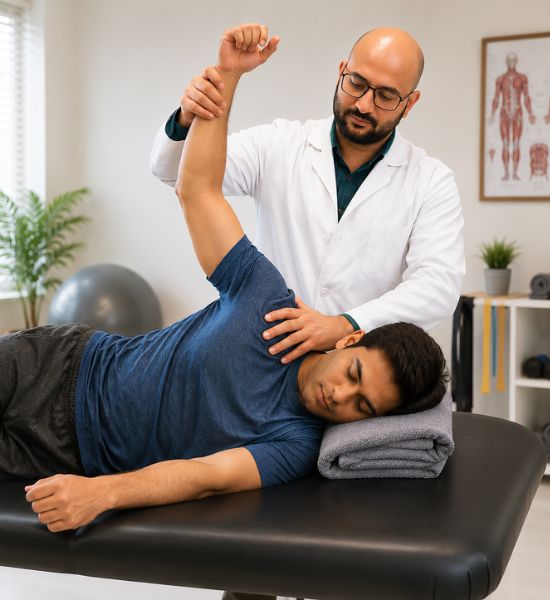
Frozen Shoulder Treatment in Gurugram
You may be experiencing Frozen Shoulder, a common but often frustrating condition that gradually restricts shoulder movement and affects daily life.
At UM Physiotherapy, we provide evidence-based Frozen Shoulder Treatment in Gurugram focused on reducing pain, restoring mobility, improving shoulder function, and helping patients return to normal activities without discomfort.
Under the expert care of Dr. Mohd Umar Mukhtar Qurashi, a Gold Medalist Physiotherapist, HCPC Registered Physiotherapist (United Kingdom), Associate Team Leader – Physiotherapy at Artemis Hospital, and a clinician with more than 10 years of advanced experience, patients receive personalized rehabilitation programs designed to achieve long-term recovery.
What is Frozen Shoulder?
Frozen Shoulder, medically known as Adhesive Capsulitis, is a condition in which the shoulder capsule becomes thickened and tight, causing pain and progressive loss of movement.
The shoulder joint normally has a flexible capsule that allows a wide range of motion.
In Frozen Shoulder:
- The capsule becomes inflamed
- Scar tissue develops
- Movement becomes restricted
- Pain increases
- Daily activities become difficult
The condition often develops gradually and may worsen over several months if left untreated.
Understanding the Shoulder Joint
The shoulder is one of the most mobile joints in the human body.
It allows:
- Reaching Overhead
- Lifting Objects
- Throwing Activities
- Dressing
- Grooming
- Daily Functional Tasks
Because of its complex structure, even small restrictions can significantly affect daily life.
Causes of Frozen Shoulder
In many cases, the exact cause is unknown.
However, several risk factors increase the likelihood of developing Frozen Shoulder.
Diabetes
Individuals with diabetes have a significantly higher risk.
Shoulder Injury
Previous shoulder trauma may contribute to shoulder stiffness.
Shoulder Surgery
Post-surgical immobilization can increase risk.
Prolonged Inactivity
Reduced shoulder movement for extended periods may lead to stiffness.
Rotator Cuff Injuries
Shoulder tendon problems sometimes contribute to Frozen Shoulder development.
Age
Most commonly affects individuals between 40 and 60 years of age.
Symptoms of Frozen Shoulder
Symptoms usually develop gradually.
Shoulder Pain
Pain is often worse during movement and at night.
Shoulder Stiffness
Patients notice progressive restriction in shoulder mobility.
Difficulty Reaching Overhead
Simple activities become challenging.
Pain During Sleep
Many patients struggle to sleep on the affected side.
Difficulty Dressing
Putting on shirts, jackets, or reaching behind the back becomes difficult.
Restricted Shoulder Movement
Both active and passive movements become limited.
Stages of Frozen Shoulder
Frozen Shoulder typically progresses through three stages.
Stage 1: Freezing Stage
During this stage:
- Pain gradually increases
- Shoulder movement becomes more difficult
- Daily activities become uncomfortable
This phase may last several weeks to months.
Stage 2: Frozen Stage
Pain may reduce slightly, but stiffness becomes significant.
Common problems include:
- Difficulty Lifting the Arm
- Limited Shoulder Movement
- Functional Restrictions
This stage often affects quality of life significantly.
Stage 3: Thawing Stage
The shoulder gradually begins to recover.
Patients often notice:
- Improved Mobility
- Reduced Stiffness
- Better Function
Recovery may take several months.
Who is at Risk of Frozen Shoulder?
The condition is more common in:
- Individuals Aged 40–60
- Diabetic Patients
- Office Workers
- Post-Surgical Patients
- Individuals Recovering From Shoulder Injuries
- People With Limited Shoulder Activity
Why Frozen Shoulder Should Not Be Ignored
Without treatment, Frozen Shoulder can affect:
- Work Performance
- Sleep Quality
- Driving
- Household Activities
- Exercise
- Sports Participation
Early physiotherapy often improves recovery outcomes and helps prevent long-term stiffness.
Frozen Shoulder vs Rotator Cuff Injury
Many patients confuse these two conditions.
Frozen Shoulder
Typically causes:
- Severe Stiffness
- Global Movement Restriction
- Gradual Onset
Rotator Cuff Injury
Often causes:
- Shoulder Weakness
- Pain During Lifting
- Tendon-Related Symptoms
Learn More: Rotator Cuff Injury Rehabilitation
How Physiotherapy Helps Frozen Shoulder
Frozen Shoulder Physiotherapy in Gurugram is one of the most effective treatment approaches for improving shoulder mobility and reducing symptoms.
Treatment focuses on:
Pain Reduction
Reducing discomfort and improving activity tolerance.
Mobility Restoration
Improving shoulder flexibility and movement.
Joint Mobilization
Helping restore normal shoulder mechanics.
Stretching Programs
Reducing stiffness and improving range of motion.
Strength Development
Restoring muscular support around the shoulder.
Functional Rehabilitation
Helping patients return to daily activities confidently.
Benefits of Frozen Shoulder Physiotherapy
Patients often experience:
✓ Reduced Pain
✓ Improved Shoulder Mobility
✓ Better Sleep Quality
✓ Improved Function
✓ Easier Daily Activities
✓ Better Strength
✓ Faster Recovery
✓ Improved Quality of Life
Our Frozen Shoulder Rehabilitation Approach
At UM Physiotherapy, every treatment plan is customized.
Comprehensive Assessment
Identifying limitations and contributing factors.
Movement Analysis
Understanding shoulder mechanics.
Progressive Rehabilitation
Improving mobility and strength safely.
Functional Recovery
Helping patients return to daily activities.
Long-Term Prevention
Reducing future shoulder dysfunction.
Why Choose Dr. Mohd Umar Mukhtar Qurashi?
Professional Credentials
- Gold Medalist in Master of Physiotherapy
- HCPC Registered Physiotherapist (United Kingdom)
- Associate Team Leader – Physiotherapy at Artemis Hospital
- 10+ Years of Clinical Experience
- Certified Dry Needling Practitioner
- Certified Functional Manipulation Specialist
Expertise Includes
- Frozen Shoulder Treatment
- Shoulder Pain Physiotherapy
- Rotator Cuff Rehabilitation
- Orthopedic Physiotherapy
- Joint Mobility Restoration
- Pain Relief Physiotherapy
Every treatment plan is designed to help patients regain mobility, reduce pain, and return to normal life with confidence.
Recovery Timeline for Frozen Shoulder
One of the most common questions patients ask is:
“How long does Frozen Shoulder take to heal?”
The recovery timeline varies depending on:
- Stage of the Condition
- Severity of Stiffness
- Duration of Symptoms
- Underlying Medical Conditions
- Treatment Consistency
- Individual Healing Response
Unlike many other musculoskeletal conditions, Frozen Shoulder often develops gradually and may take several months to recover completely.
Mild Frozen Shoulder
Recovery may take:
- 2 to 4 Months
Especially when physiotherapy begins early.
Moderate Frozen Shoulder
Recovery may take:
- 4 to 9 Months
Structured rehabilitation becomes essential.
Severe Frozen Shoulder
Recovery may take:
- 9 to 18 Months
Patients often require progressive physiotherapy and long-term mobility restoration.
Frozen Shoulder and Diabetes
Research shows that individuals with Diabetes are significantly more likely to develop Frozen Shoulder.
Diabetic patients often experience:
- More Severe Stiffness
- Longer Recovery Times
- Increased Shoulder Pain
- Greater Movement Restrictions
This makes early physiotherapy intervention even more important.
At UM Physiotherapy, treatment programs are modified according to each patient’s medical condition and functional goals.
Stages of Frozen Shoulder Rehabilitation
Successful treatment requires a structured rehabilitation approach.
Phase 1 – Pain Management
The initial focus is reducing pain and inflammation.
Goals include:
- Pain Relief
- Improved Comfort
- Better Sleep Quality
- Gentle Movement Restoration
Phase 2 – Mobility Restoration
This is the most important phase of Frozen Shoulder treatment.
Focus areas include:
- Shoulder Flexion
- Shoulder Abduction
- External Rotation
- Functional Reach
The goal is to gradually restore lost movement.
Phase 3 – Flexibility Improvement
As mobility improves, stretching programs become increasingly important.
Benefits include:
- Reduced Stiffness
- Improved Joint Mobility
- Better Functional Movement
Phase 4 – Strength Development
Once mobility improves, strengthening exercises help restore normal shoulder function.
Muscles targeted include:
- Rotator Cuff Muscles
- Deltoid Muscles
- Scapular Stabilizers
- Upper Back Muscles
Phase 5 – Functional Rehabilitation
The final phase focuses on restoring:
- Dressing Activities
- Overhead Activities
- Lifting Tasks
- Household Activities
- Sports Participation
Best Exercises for Frozen Shoulder
Exercise is one of the most important components of Frozen Shoulder Physiotherapy.
Pendulum Exercises
Often used during the early stages.
Benefits include:
- Gentle Mobility
- Pain Reduction
- Improved Joint Nutrition
Wall Climbing Exercises
Help gradually improve shoulder elevation.
Towel Stretch Exercises
Useful for improving shoulder flexibility and range of motion.
External Rotation Stretch
Targets one of the most restricted movements in Frozen Shoulder.
Shoulder Mobility Drills
Help restore functional movement patterns.
Strengthening Exercises
Used during later stages to restore stability and function.
Important: Exercises should always be prescribed according to the stage of Frozen Shoulder and individual assessment findings.
Can Frozen Shoulder Heal Without Treatment?
Some patients eventually regain movement naturally.
However, recovery may take:
- Many Months
- Sometimes Several Years
Without physiotherapy, patients may experience:
- Prolonged Stiffness
- Persistent Pain
- Reduced Function
- Limited Daily Activities
Professional treatment often accelerates recovery and improves outcomes.
Home Physiotherapy for Frozen Shoulder
Many patients find it difficult to travel because of pain and limited movement.
Our Home Physiotherapy Services in Gurugram provide expert treatment in the comfort of your home.
Home rehabilitation is ideal for:
- Elderly Patients
- Diabetic Patients
- Post-Surgical Patients
- Individuals with Severe Pain
- Busy Professionals
Benefits include:
✓ Personalized Care
✓ Convenient Treatment
✓ Reduced Travel Burden
✓ Better Treatment Compliance
✓ Comfortable Recovery Environment
Common Mistakes That Delay Recovery
Ignoring Early Symptoms
Delaying treatment often increases stiffness.
Avoiding Shoulder Movement Completely
Excessive rest may worsen mobility loss.
Performing Aggressive Exercises
Overstretching may increase irritation and pain.
Inconsistent Rehabilitation
Recovery requires regular physiotherapy and exercise.
Stopping Treatment Too Early
Many patients discontinue therapy before achieving full recovery.
How to Prevent Frozen Shoulder
Although prevention is not always possible, certain strategies may reduce risk.
Stay Physically Active
Regular shoulder movement promotes joint health.
Address Shoulder Pain Early
Prompt treatment reduces the risk of developing stiffness.
Follow Rehabilitation After Injury
Proper recovery following shoulder injuries is essential.
Maintain Mobility After Surgery
Post-operative physiotherapy helps prevent complications.
Manage Diabetes Effectively
Good blood sugar control may reduce risk.
Frequently Asked Questions About Frozen Shoulder Treatment in Gurugram
1. What is Frozen Shoulder?
Frozen Shoulder is a condition that causes pain and progressive restriction of shoulder movement.
2. What causes Frozen Shoulder?
Common risk factors include diabetes, shoulder injuries, surgery, and prolonged inactivity.
3. Can physiotherapy help Frozen Shoulder?
Yes. Frozen Shoulder Physiotherapy is one of the most effective treatment approaches for restoring mobility and reducing pain.
4. How long does Frozen Shoulder last?
Recovery timelines vary but often range from several months to over a year depending on severity.
5. Is Frozen Shoulder permanent?
No. Most patients improve significantly with appropriate treatment.
6. Can diabetes cause Frozen Shoulder?
Yes. Diabetes is one of the strongest risk factors associated with Frozen Shoulder.
7. What exercises help Frozen Shoulder?
Mobility exercises, stretching programs, and strengthening exercises are commonly used.
8. Is surgery necessary?
Most patients improve successfully with physiotherapy and conservative treatment.
9. Can Home Physiotherapy help Frozen Shoulder?
Yes. Home-based rehabilitation is highly effective for many patients.
10. When should I see a physiotherapist?
You should seek professional help if shoulder pain or stiffness affects daily activities, sleep, or work.
Related Orthopedic Physiotherapy Services
Shoulder Stiffness Treatment in Gurugram
Shoulder Stiffness Treatment in Gurugram
Specialized rehabilitation for restricted shoulder mobility.
Rotator Cuff Injury Rehabilitation in Gurugram
Rotator Cuff Injury Rehabilitation
Evidence-based treatment for shoulder tendon injuries.
Joint Pain Treatment in Gurugram
Joint Pain Treatment in Gurugram
Comprehensive rehabilitation for pain affecting multiple joints.
Orthopedic Physiotherapy in Gurugram
Orthopedic Physiotherapy in Gurugram
Expert physiotherapy for musculoskeletal pain and rehabilitation.
Home Physiotherapy in Gurugram
Home Physiotherapy in Gurugram
Professional home-based physiotherapy services across Gurugram.
Book Frozen Shoulder Treatment in Gurugram
Frozen Shoulder can make even the simplest daily activities difficult and frustrating. The earlier treatment begins, the better the chances of restoring mobility and preventing long-term stiffness.
Receive expert Frozen Shoulder Treatment in Gurugram from Dr. Mohd Umar Mukhtar Qurashi, a Gold Medalist Physiotherapist, HCPC Registered Physiotherapist (UK), and Associate Team Leader – Physiotherapy at Artemis Hospital.
Why Choose UM Physiotherapy?
✓ Frozen Shoulder Specialists
✓ Shoulder Pain Rehabilitation Experts
✓ Certified Dry Needling Practitioner
✓ Evidence-Based Physiotherapy
✓ Home Physiotherapy Available
✓ HCPC Registered Physiotherapist (UK)
✓ 10+ Years of Advanced Clinical Experience
✓ Personalized One-to-One Care
Schedule Your Consultation
📞 +91 87965 56680
📧 appointment@drumarmukhtar.com
📍 Sohna, Gurugram, Haryana
Start your recovery today with professional Frozen Shoulder Physiotherapy in Gurugram and regain the mobility, comfort, and confidence to move freely again.