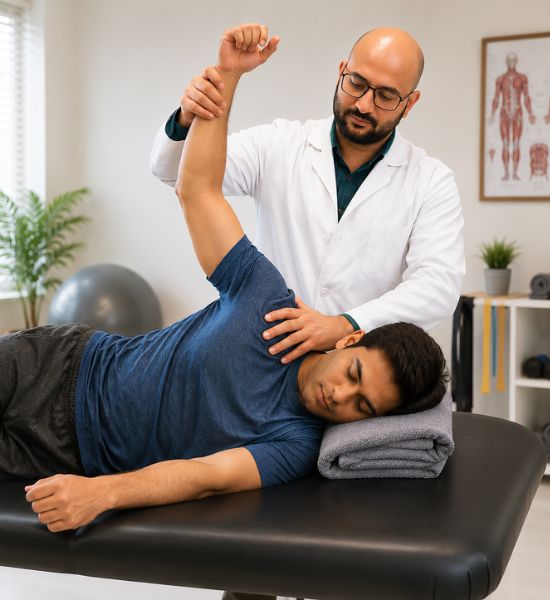
Shoulder Stiffness Treatment in Gurugram
Many patients ignore early signs of stiffness until movement becomes severely limited. Unfortunately, delayed treatment often leads to longer recovery times and greater functional limitations.
At UM Physiotherapy, we provide evidence-based Shoulder Stiffness Treatment in Gurugram designed to restore mobility, reduce pain, improve strength, and help patients regain confidence in using their shoulder.
Under the guidance of Dr. Mohd Umar Mukhtar Qurashi, a Gold Medalist Physiotherapist, HCPC Registered Physiotherapist (United Kingdom), Associate Team Leader – Physiotherapy at Artemis Hospital, and a clinician with over 10 years of advanced experience, patients receive personalized rehabilitation programs focused on long-term recovery.
What is Shoulder Stiffness?
Shoulder Stiffness refers to a reduction in the normal range of motion of the shoulder joint.
Patients often experience difficulty performing movements such as:
- Reaching Overhead
- Reaching Behind the Back
- Lifting Objects
- Dressing
- Grooming Activities
- Sports Participation
The condition may develop gradually or occur after an injury, surgery, or prolonged inactivity.
Understanding the Shoulder Joint
The shoulder is one of the most mobile joints in the human body.
It allows movement in multiple directions including:
- Flexion
- Extension
- Abduction
- Adduction
- Internal Rotation
- External Rotation
Because of its complexity, the shoulder relies on:
- Muscles
- Tendons
- Ligaments
- Joint Capsule
- Scapular Stability
Any dysfunction affecting these structures may contribute to stiffness.
Common Causes of Shoulder Stiffness
Several conditions can restrict shoulder movement.
Frozen Shoulder (Adhesive Capsulitis)
One of the most common causes of severe shoulder stiffness.
Symptoms include:
- Progressive Stiffness
- Pain
- Difficulty Lifting the Arm
- Restricted Mobility
Read More: Frozen Shoulder Treatment in Gurugram
Rotator Cuff Injuries
Damage to the shoulder tendons may cause pain and movement limitations.
Common symptoms include:
- Weakness
- Pain During Lifting
- Restricted Function
Shoulder Impingement Syndrome
Occurs when shoulder tissues become compressed during movement.
Post-Surgical Stiffness
Reduced movement following surgery may lead to significant mobility loss.
Shoulder Arthritis
Degenerative changes can affect joint movement and function.
Prolonged Immobilization
Keeping the shoulder inactive for extended periods often results in stiffness.
Symptoms of Shoulder Stiffness
Patients commonly report:
Difficulty Reaching Overhead
Activities such as placing items on shelves become difficult.
Difficulty Reaching Behind the Back
Tasks like fastening clothing may become challenging.
Shoulder Pain
Pain often accompanies stiffness.
Reduced Range of Motion
Movement becomes increasingly restricted.
Weakness
Loss of mobility often contributes to muscular weakness.
Difficulty Sleeping
Night pain frequently affects sleep quality.
Who is at Risk of Shoulder Stiffness?
Certain individuals are more likely to develop shoulder mobility problems.
Office Workers
Poor posture and prolonged sitting may contribute to dysfunction.
Diabetic Patients
Higher risk of developing Frozen Shoulder.
Athletes
Shoulder overuse injuries may restrict movement.
Post-Surgical Patients
Often require rehabilitation to restore mobility.
Older Adults
Age-related changes may affect shoulder function.
Why Shoulder Stiffness Should Not Be Ignored
Ignoring shoulder stiffness may result in:
- Chronic Pain
- Severe Mobility Loss
- Muscle Weakness
- Functional Limitations
- Reduced Independence
Early physiotherapy intervention often improves outcomes and shortens recovery time.
How Shoulder Stiffness Affects Daily Life
Restricted shoulder movement can interfere with:
- Dressing
- Bathing
- Cooking
- Driving
- Working
- Exercising
- Sports Activities
- Household Tasks
Many patients become frustrated because routine activities become difficult or painful.
Shoulder Stiffness vs Frozen Shoulder
Although related, these terms are not always the same.
Shoulder Stiffness
A symptom characterized by reduced movement.
Frozen Shoulder
A specific medical condition causing severe stiffness and pain.
Not every patient with shoulder stiffness has Frozen Shoulder.
A proper physiotherapy assessment helps determine the exact diagnosis.
How Physiotherapy Helps Shoulder Stiffness
Shoulder Stiffness Physiotherapy in Gurugram focuses on restoring movement and improving function.
Treatment may include:
Pain Management
Reducing discomfort and improving tolerance to movement.
Joint Mobilization
Improving shoulder joint mechanics.
Stretching Programs
Restoring flexibility and range of motion.
Strength Development
Improving muscular support around the shoulder.
Postural Correction
Addressing movement patterns contributing to dysfunction.
Functional Rehabilitation
Helping patients return to daily activities safely.
Benefits of Shoulder Stiffness Physiotherapy
Patients often experience:
✓ Improved Shoulder Mobility
✓ Reduced Pain
✓ Better Function
✓ Improved Strength
✓ Easier Daily Activities
✓ Better Sleep Quality
✓ Reduced Risk of Future Problems
✓ Improved Quality of Life
Conditions Related to Shoulder Stiffness
Frozen Shoulder Treatment in Gurugram
Frozen Shoulder Treatment in Gurugram
Advanced rehabilitation for adhesive capsulitis.
Rotator Cuff Injury Rehabilitation in Gurugram
Rotator Cuff Injury Rehabilitation in Gurugram
Targeted treatment for shoulder tendon injuries.
Shoulder Pain Physiotherapy in Gurugram
Shoulder Pain Physiotherapy in Gurugram
Comprehensive rehabilitation for shoulder pain and dysfunction.
Orthopedic Physiotherapy in Gurugram
Orthopedic Physiotherapy in Gurugram
Evidence-based treatment for musculoskeletal conditions.
Our Shoulder Rehabilitation Approach
Every patient receives a customized treatment plan.
Detailed Assessment
Identifying the cause of movement restrictions.
Movement Analysis
Understanding functional limitations.
Progressive Rehabilitation
Improving mobility, strength, and confidence.
Functional Recovery
Restoring daily activities and independence.
Long-Term Prevention
Reducing recurrence and future dysfunction.
Why Choose Dr. Mohd Umar Mukhtar Qurashi?
Professional Credentials
- Gold Medalist in Master of Physiotherapy
- HCPC Registered Physiotherapist (United Kingdom)
- Associate Team Leader – Physiotherapy at Artemis Hospital
- 10+ Years of Clinical Experience
- Certified Dry Needling Practitioner
- Certified Functional Manipulation Specialist
Expertise Includes
- Shoulder Stiffness Treatment
- Frozen Shoulder Rehabilitation
- Rotator Cuff Rehabilitation
- Shoulder Mobility Restoration
- Orthopedic Physiotherapy
- Pain Relief Rehabilitation
Every rehabilitation program is designed to restore mobility, reduce pain, and help patients return to an active lifestyle.
Recovery Timeline for Shoulder Stiffness
One of the most common questions patients ask is:
“How long will it take for my shoulder stiffness to improve?”
The answer depends on several factors:
- Underlying Cause
- Severity of Stiffness
- Duration of Symptoms
- Age
- Activity Levels
- Treatment Consistency
Patients who begin physiotherapy early often recover faster and achieve better long-term results.
Mild Shoulder Stiffness
Recovery may take:
- 2 to 6 Weeks
Especially when caused by postural issues or minor movement restrictions.
Moderate Shoulder Stiffness
Recovery may take:
- 6 to 12 Weeks
Structured rehabilitation becomes essential.
Severe Shoulder Stiffness
Recovery may require:
- Several Months
Particularly in cases involving Frozen Shoulder, post-surgical stiffness, or chronic mobility loss.
Stages of Shoulder Rehabilitation
At UM Physiotherapy, treatment follows a progressive rehabilitation model.
Phase 1 – Pain Management
The first goal is reducing pain and improving comfort.
Treatment focuses on:
- Pain Reduction
- Gentle Mobility
- Inflammation Control
- Activity Modification
Phase 2 – Mobility Restoration
This phase focuses on restoring lost movement.
Target movements include:
- Shoulder Flexion
- Shoulder Abduction
- Internal Rotation
- External Rotation
Phase 3 – Flexibility Improvement
Progressive stretching helps reduce joint and muscle tightness.
Benefits include:
- Better Range of Motion
- Reduced Stiffness
- Improved Functional Movement
Phase 4 – Strength Development
As mobility improves, strengthening becomes a priority.
Key muscles include:
- Rotator Cuff Muscles
- Deltoid Muscles
- Scapular Stabilizers
- Upper Back Muscles
Phase 5 – Functional Rehabilitation
Patients gradually return to:
- Daily Activities
- Household Tasks
- Work Activities
- Gym Training
- Sports Participation
Best Exercises for Shoulder Stiffness
Exercise plays a critical role in restoring shoulder mobility.
Pendulum Exercises
A gentle exercise commonly used during the early stages.
Benefits include:
- Improved Joint Mobility
- Pain Reduction
- Better Circulation
Wall Climbing Exercise
Helps improve shoulder elevation and overhead movement.
Shoulder Flexion Stretch
Useful for restoring forward arm movement.
Cross-Body Stretch
Improves shoulder flexibility and movement quality.
External Rotation Stretch
Targets one of the most commonly restricted shoulder movements.
Scapular Strengthening Exercises
Improve posture and shoulder stability.
Resistance Band Exercises
Used in later stages to restore strength and function.
Exercise programs should always be individualized according to clinical assessment findings.
Home Physiotherapy for Shoulder Stiffness
Many patients benefit from receiving treatment at home.
Our Home Physiotherapy in Gurugram service is ideal for:
- Elderly Individuals
- Post-Surgical Patients
- Frozen Shoulder Patients
- Busy Professionals
- Individuals with Severe Pain
Benefits include:
✓ Personalized Treatment
✓ Convenient Scheduling
✓ Reduced Travel Burden
✓ Comfortable Recovery Environment
✓ Better Treatment Consistency
✓ Family Support During Recovery
Common Mistakes That Delay Recovery
Ignoring Early Symptoms
Mild stiffness often progresses when left untreated.
Avoiding Shoulder Movement
Too much rest may worsen stiffness.
Poor Posture
Poor shoulder and spinal posture contribute to mobility restrictions.
Inconsistent Exercise
Regular rehabilitation is essential for recovery.
Returning to Activities Too Early
Overloading the shoulder before recovery may worsen symptoms.
How to Prevent Shoulder Stiffness
Stay Physically Active
Regular movement helps maintain shoulder mobility.
Maintain Good Posture
Proper posture reduces unnecessary shoulder stress.
Address Shoulder Pain Early
Prompt treatment prevents long-term complications.
Follow Post-Surgical Rehabilitation
Structured rehabilitation reduces mobility loss after surgery.
Perform Mobility Exercises Regularly
Simple mobility exercises help maintain flexibility.
Frequently Asked Questions About Shoulder Stiffness Treatment in Gurugram
1. What causes shoulder stiffness?
Common causes include Frozen Shoulder, rotator cuff injuries, arthritis, post-surgical stiffness, poor posture, and prolonged inactivity.
2. Can physiotherapy help shoulder stiffness?
Yes. Shoulder Stiffness Physiotherapy is one of the most effective treatments for improving mobility and reducing pain.
3. Is shoulder stiffness the same as Frozen Shoulder?
No. Shoulder stiffness is a symptom, while Frozen Shoulder is a specific condition causing severe stiffness and pain.
4. How long does shoulder stiffness take to recover?
Recovery depends on the severity and underlying cause, ranging from a few weeks to several months.
5. What exercises help shoulder stiffness?
Stretching, mobility exercises, strengthening exercises, and posture correction exercises are commonly prescribed.
6. Can shoulder stiffness cause pain?
Yes. Many patients experience both pain and movement restriction.
7. Is surgery required for shoulder stiffness?
Most patients improve successfully with physiotherapy and conservative treatment.
8. Can Home Physiotherapy help shoulder stiffness?
Yes. Home-based rehabilitation is highly effective for many patients.
9. Can poor posture cause shoulder stiffness?
Yes. Poor posture can contribute to reduced mobility and shoulder dysfunction.
10. When should I see a physiotherapist?
You should seek professional help if stiffness affects daily activities, work, sleep, exercise, or shoulder function.
Related Orthopedic Physiotherapy Services
Frozen Shoulder Treatment in Gurugram
Frozen Shoulder Treatment in Gurugram
Specialized rehabilitation for adhesive capsulitis and severe shoulder stiffness.
Shoulder Pain Physiotherapy in Gurugram
Shoulder Pain Physiotherapy in Gurugram
Comprehensive treatment for shoulder pain and movement dysfunction.
Rotator Cuff Injury Rehabilitation in Gurugram
Rotator Cuff Injury Rehabilitation in Gurugram
Evidence-based rehabilitation for shoulder tendon injuries.
Orthopedic Physiotherapy in Gurugram
Orthopedic Physiotherapy in Gurugram
Advanced physiotherapy for joint pain, mobility issues, and orthopedic conditions.
Home Physiotherapy in Gurugram
Joint Pain Treatment in Gurugram
Professional physiotherapy services delivered at home.
Book Shoulder Stiffness Treatment in Gurugram
Shoulder stiffness can gradually limit your independence, affect work performance, and reduce your quality of life. Early physiotherapy intervention can help restore mobility, improve strength, and prevent long-term complications.
Receive expert Shoulder Stiffness Treatment in Gurugram from Dr. Mohd Umar Mukhtar Qurashi, a Gold Medalist Physiotherapist, HCPC Registered Physiotherapist (UK), Associate Team Leader – Physiotherapy at Artemis Hospital, and a specialist in orthopedic and musculoskeletal rehabilitation.
Why Choose UM Physiotherapy?
✓ Shoulder Mobility Specialists
✓ Frozen Shoulder Experts
✓ Rotator Cuff Rehabilitation
✓ Evidence-Based Physiotherapy
✓ Home Physiotherapy Available
✓ HCPC Registered Physiotherapist (UK)
✓ 10+ Years of Advanced Clinical Experience
✓ Personalized One-to-One Treatment
Schedule Your Consultation
📞 +91 87965 56680
📧 appointment@drumarmukhtar.com
📍 Sohna, Gurugram, Haryana
Restore your shoulder mobility and regain confidence in movement with professional Shoulder Stiffness Physiotherapy in Gurugram.