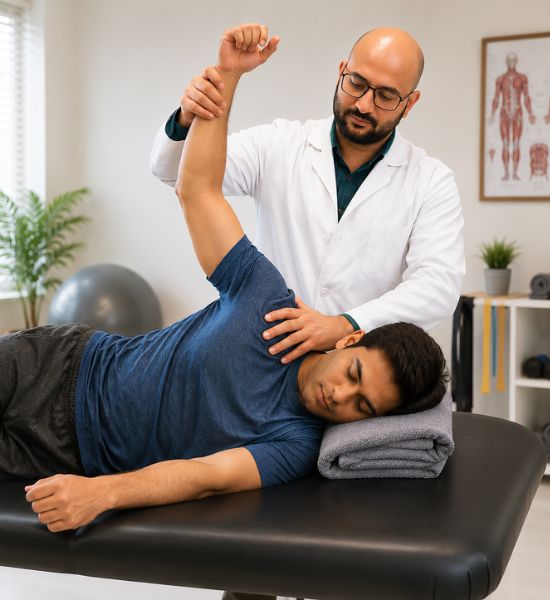
Hamstring Injury Rehabilitation in Gurugram
At UM Physiotherapy, we provide evidence-based Hamstring Injury Rehabilitation in Gurugram designed to reduce pain, restore flexibility, improve strength, and help patients safely return to sports and physical activity.
Under the guidance of Dr. Mohd Umar Mukhtar Qurashi, a Gold Medalist Physiotherapist, HCPC Registered Physiotherapist (United Kingdom), and Associate Team Leader – Physiotherapy at Artemis Hospital, patients receive personalized rehabilitation programs tailored to their injury severity, sport, and recovery goals.
What is a Hamstring Injury?
The hamstrings are a group of three muscles located at the back of the thigh.
These muscles play an important role in:
- Running
- Sprinting
- Jumping
- Walking
- Bending the Knee
- Sports Performance
A hamstring injury occurs when these muscles or their tendons become overstretched, strained, or torn.
Understanding the Hamstring Muscles
The hamstring group consists of:
Biceps Femoris
One of the most commonly injured hamstring muscles.
Semitendinosus
Helps control knee movement and hip extension.
Semimembranosus
Provides stability and power during athletic activities.
Together these muscles generate force during running, acceleration, and explosive movements.
Common Causes of Hamstring Injuries
Sprinting
One of the most common causes of hamstring strains.
Sudden Acceleration
Rapid increases in speed place high stress on the muscles.
Sudden Deceleration
Stopping quickly can overload the hamstrings.
Poor Warm-Up
Insufficient preparation increases injury risk.
Muscle Weakness
Weak hamstrings are more vulnerable to injury.
Muscle Imbalances
Strength differences between muscle groups increase risk.
Previous Hamstring Injuries
A prior hamstring injury is one of the strongest predictors of future injury.
Types of Hamstring Injuries
Grade 1 Hamstring Strain
A mild muscle injury involving overstretching.
Common symptoms include:
- Mild Pain
- Tightness
- Minor Strength Loss
Grade 2 Hamstring Strain
A partial muscle tear.
Common symptoms include:
- Moderate Pain
- Swelling
- Reduced Strength
- Difficulty Running
Grade 3 Hamstring Tear
A severe injury involving a complete muscle tear.
Common symptoms include:
- Significant Pain
- Bruising
- Marked Weakness
- Difficulty Walking
Symptoms of a Hamstring Injury
Pain in the Back of the Thigh
The most common symptom.
Tightness
The muscle may feel stiff and restricted.
Swelling
Often develops shortly after injury.
Bruising
More common in moderate and severe injuries.
Weakness
Running and explosive movements become difficult.
Reduced Flexibility
Stretching the muscle may be painful.
Who is at Risk of Hamstring Injuries?
Higher-risk groups include:
- Football Players
- Cricketers
- Sprinters
- Runners
- Rugby Players
- Athletes
- Gym Enthusiasts
- Dancers
Hamstring Injury vs Sciatica
Many patients confuse a hamstring injury with Sciatica.
Hamstring Injury
Typically causes:
- Localized Pain
- Muscle Tightness
- Pain During Running
- Pain During Stretching
Sciatica
Often causes:
- Radiating Leg Pain
- Tingling
- Numbness
- Nerve Symptoms
Learn More: Sciatica Treatment in Gurugram
How is a Hamstring Injury Diagnosed?
Clinical Examination
Assessment includes:
- Pain Location
- Strength Testing
- Flexibility Assessment
- Walking Pattern
- Running Mechanics
Functional Assessment
Evaluating movement performance and athletic requirements.
Imaging
MRI or Ultrasound may be recommended for significant injuries.
How Physiotherapy Helps Hamstring Injuries
Hamstring Injury Rehabilitation in Gurugram focuses on restoring muscle function while reducing the risk of recurrence.
Treatment may include:
Pain Management
Reducing discomfort and supporting recovery.
Mobility Restoration
Improving flexibility and muscle length.
Strength Development
Progressively rebuilding strength and power.
Running Rehabilitation
Restoring efficient movement mechanics.
Sport-Specific Rehabilitation
Preparing athletes for competition and training.
Benefits of Hamstring Rehabilitation
Patients often experience:
- Reduced Pain
- Improved Flexibility
- Better Strength
- Improved Running Performance
- Reduced Re-Injury Risk
- Greater Confidence During Activity
- Faster Return to Sports
Our Hamstring Rehabilitation Approach
Every rehabilitation program is customized.
Comprehensive Assessment
Understanding injury severity and movement limitations.
Progressive Strength Training
Restoring muscular capacity and resilience.
Running Retraining
Improving efficiency and reducing injury risk.
Functional Rehabilitation
Preparing patients for daily and athletic demands.
Return-to-Sport Progression
Helping athletes safely resume competition.
Why Choose Dr. Mohd Umar Mukhtar Qurashi?
Professional Credentials
- Gold Medalist in Master of Physiotherapy
- HCPC Registered Physiotherapist (United Kingdom)
- Associate Team Leader – Physiotherapy at Artemis Hospital
- 10+ Years of Clinical Experience
- Certified Dry Needling Practitioner
- Certified Functional Manipulation Specialist
Expertise Includes
- Hamstring Injury Rehabilitation
- Sports Physiotherapy
- Running Injury Rehabilitation
- Athlete Recovery Programs
- Return-to-Sport Rehabilitation
- Performance Enhancement Programs
Every rehabilitation plan is designed to help patients recover safely, restore performance, and reduce the risk of future injuries.
Hamstring Injury Recovery Timeline
One of the most common questions athletes ask is:
“How long will it take to recover from a hamstring injury?”
Recovery depends on:
- Severity of the Injury
- Location of the Injury
- Previous Hamstring Injuries
- Athletic Demands
- Rehabilitation Compliance
- Overall Fitness Level
Grade 1 Hamstring Strain
Recovery may take:
- 1 to 4 Weeks
These mild injuries often respond well to early physiotherapy and progressive rehabilitation.
Grade 2 Hamstring Strain
Recovery may take:
- 4 to 12 Weeks
Structured rehabilitation becomes essential for restoring strength and preventing recurrence.
Grade 3 Hamstring Tear
Recovery may take:
- Several Months
Severe injuries often require an extended rehabilitation program before returning to sports.
Stages of Hamstring Rehabilitation
At UM Physiotherapy, rehabilitation follows a progressive and evidence-based approach.
Phase 1 – Pain and Protection
The initial goal is reducing pain and protecting the injured tissue.
Treatment focuses on:
- Pain Management
- Reducing Irritation
- Maintaining Mobility
- Early Movement Strategies
Phase 2 – Mobility Restoration
Goals include:
- Restore Flexibility
- Improve Range of Motion
- Reduce Muscle Tightness
- Improve Movement Quality
Phase 3 – Strength Development
This phase focuses on rebuilding muscle capacity.
Programs target:
- Hamstring Strength
- Glute Strength
- Core Stability
- Lower Limb Control
Phase 4 – Running Rehabilitation
Athletes gradually progress through:
- Walking
- Jogging
- Running Drills
- Sprint Progressions
Phase 5 – Sports Rehabilitation
Athletes prepare for:
- Direction Changes
- Explosive Movements
- Jumping
- Sprinting
- Sport-Specific Activities
Phase 6 – Return to Competition
Performance testing helps ensure readiness before returning to full sports participation.
Why Hamstring Injuries Frequently Return
Hamstring injuries have one of the highest recurrence rates in sports medicine.
Common reasons include:
Returning Too Early
Athletes often return before full recovery.
Inadequate Strength
Weak hamstrings remain vulnerable to reinjury.
Poor Running Mechanics
Movement inefficiencies increase tissue stress.
Reduced Flexibility
Persistent tightness affects performance and injury risk.
Previous Injury History
A prior hamstring injury significantly increases future risk.
This is why complete rehabilitation is critical.
Exercises Commonly Used for Hamstring Rehabilitation
Exercise selection depends on injury severity and recovery stage.
Hamstring Isometric Exercises
Often used during the early stages of recovery.
Bridge Variations
Improve posterior chain strength and control.
Nordic Hamstring Exercises
One of the most effective exercises for hamstring injury prevention and rehabilitation.
Romanian Deadlifts
Develop strength and resilience in the hamstrings.
Single-Leg Strength Training
Improves balance, stability, and movement control.
Sprint Preparation Drills
Used during advanced sports rehabilitation phases.
Important: Exercises should always be prescribed and progressed according to professional assessment.
Return to Running After a Hamstring Injury
Many athletes feel eager to resume running once pain decreases.
However, returning too early increases the risk of re-injury.
Before returning to running, patients should demonstrate:
✓ Full Range of Motion
✓ Good Hamstring Strength
✓ Pain-Free Walking
✓ Good Balance
✓ Functional Lower Limb Control
✓ Confidence During Movement
Running progression should be gradual and monitored carefully.
Return to Sport After a Hamstring Injury
Athletes should successfully complete:
Strength Testing
Ensuring adequate muscle capacity.
Sprint Testing
Evaluating tolerance to high-speed running.
Agility Drills
Assessing change-of-direction performance.
Functional Testing
Determining readiness for sports participation.
Sport-Specific Activities
Replicating the physical demands of competition.
Only after passing these stages should athletes return fully to sports.
How to Prevent Hamstring Injuries
Preventive rehabilitation is critical for athletes and active individuals.
Strengthen the Hamstrings
Strong muscles are more resilient to injury.
Improve Glute Strength
Weak glutes often increase hamstring workload.
Warm Up Properly
Prepare tissues before training and competition.
Improve Running Mechanics
Efficient movement reduces excessive stress.
Maintain Flexibility
Healthy mobility supports athletic performance.
Manage Training Load
Avoid sudden increases in speed, intensity, or volume.
Frequently Asked Questions About Hamstring Injury Rehabilitation in Gurugram
1. What is a hamstring strain?
A Hamstring Strain is an injury involving overstretching or tearing of the hamstring muscle fibers.
2. How long does a hamstring injury take to heal?
Recovery depends on injury severity, athletic demands, and rehabilitation compliance.
3. Can physiotherapy help hamstring injuries?
Yes. Hamstring Physiotherapy is one of the most effective ways to restore strength, flexibility, and performance.
4. Why do hamstring injuries keep coming back?
Recurrence often occurs due to incomplete rehabilitation, weakness, poor running mechanics, or premature return to sport.
5. Can I run with a hamstring injury?
Running should only resume after professional assessment and appropriate rehabilitation progression.
6. What sports commonly cause hamstring injuries?
Football, cricket, sprinting, rugby, athletics, and other explosive sports commonly involve hamstring injuries.
7. Are hamstring stretches enough for recovery?
No. Strength training and progressive rehabilitation are equally important.
8. What is the best exercise for hamstring injury prevention?
Nordic Hamstring Exercises are among the most effective evidence-based exercises for prevention.
9. Can physiotherapy reduce the risk of re-injury?
Absolutely. Proper rehabilitation significantly reduces recurrence risk.
10. When should I see a physiotherapist?
As soon as possible after injury. Early intervention often improves recovery outcomes.
Related Sports Rehabilitation Services
ACL Injury Rehabilitation in Gurugram
ACL Injury Rehabilitation in Gurugram
Expert rehabilitation for ACL injuries and return-to-sport recovery.
Runner’s Knee Treatment in Gurugram
Runner’s Knee Treatment in Gurugram
Comprehensive physiotherapy for running-related knee pain.
Meniscus Injury Treatment in Gurugram
Meniscus Injury Treatment in Gurugram
Specialized rehabilitation for knee cartilage injuries.
Ankle Sprain Treatment in Gurugram
Ankle Sprain Treatment in Gurugram
Improve ankle stability, mobility, and sports performance.
Return to Sport Rehabilitation in Gurugram
Return to Sport Rehabilitation in Gurugram
Advanced rehabilitation designed for athletes returning to competition.
Sports Injury Rehabilitation in Gurugram
Sports Injury Rehabilitation in Gurugram
Complete sports physiotherapy programs for athletes and active individuals.
Book Hamstring Injury Rehabilitation in Gurugram
A hamstring injury can affect your speed, strength, athletic performance, and confidence. With the right rehabilitation program, you can recover safely and return stronger than before.
Receive expert Hamstring Injury Rehabilitation in Gurugram from Dr. Mohd Umar Mukhtar Qurashi, an experienced sports physiotherapist specializing in muscle injuries, athlete rehabilitation, and return-to-sport recovery.
Why Choose UM Physiotherapy?
✓ Hamstring Injury Specialists
✓ Sports Physiotherapy Experts
✓ Running & Sprint Rehabilitation
✓ Athlete Recovery Programs
✓ Return-to-Sport Testing
✓ Evidence-Based Physiotherapy
✓ HCPC Registered Physiotherapist (UK)
✓ Associate Team Leader – Physiotherapy at Artemis Hospital
✓ 10+ Years of Clinical Experience
✓ Home Visit Physiotherapy Available
Schedule Your Consultation
📞 +91 87965 56680
📧 appointment@drumarmukhtar.com
📍 Sohna, Gurugram, Haryana
Start your recovery today with professional Hamstring Injury Physiotherapy focused on strength, performance, injury prevention, and long-term athletic success.