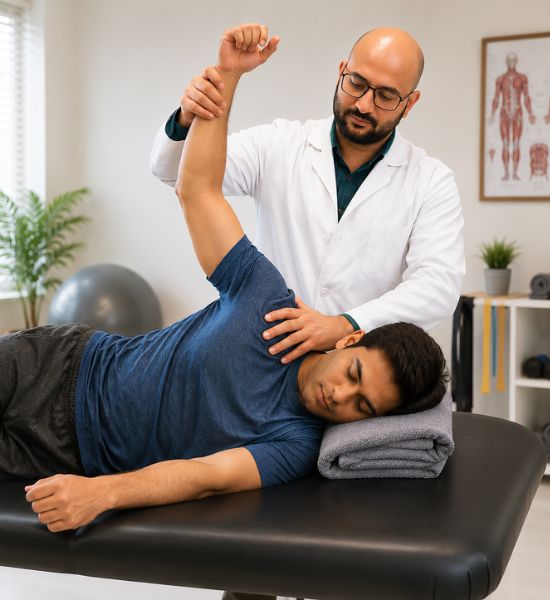
Sciatica Treatment in Gurugram
At UM Physiotherapy, we provide evidence-based Sciatica Treatment in Gurugram focused on identifying the root cause of nerve irritation, reducing pain, restoring mobility, and helping patients return to normal activities without surgery whenever possible.
Under the guidance of Dr. Mohd Umar Mukhtar Qurashi, a Gold Medalist Physiotherapist and HCPC Registered Physiotherapist (United Kingdom), patients receive personalized rehabilitation programs designed to address both symptoms and underlying spinal dysfunction.
What is Sciatica?
Sciatica is not actually a disease. It is a symptom caused by irritation, inflammation, or compression of the Sciatic Nerve, the largest nerve in the human body.
The sciatic nerve originates in the lower spine and travels through the buttocks, down the back of the thigh, and into the leg and foot.
When this nerve becomes irritated or compressed, patients may experience:
- Lower Back Pain
- Buttock Pain
- Leg Pain
- Burning Sensation
- Tingling
- Numbness
- Muscle Weakness
- Difficulty Walking
The pain can range from mild discomfort to severe, debilitating symptoms.
What Causes Sciatica?
Several spinal and musculoskeletal conditions can lead to Sciatic Nerve Compression.
Slip Disc
A Slip Disc is one of the most common causes of sciatica. When a disc bulges or herniates, it may place pressure on the sciatic nerve roots.
Learn More: Slip Disc Treatment Gurugram
Spinal Degeneration
Age-related changes in the spine can narrow spaces where nerves travel and cause irritation.
Piriformis Syndrome
The piriformis muscle can compress the sciatic nerve and create symptoms similar to sciatica.
Poor Posture
Prolonged sitting and poor spinal alignment increase stress on spinal structures.
Muscle Imbalances
Weak core muscles and poor movement patterns can contribute to spinal dysfunction and nerve irritation.
Sports Injuries
Athletes may develop sciatica due to repetitive spinal stress, lifting injuries, or muscle imbalances.
Symptoms of Sciatica
Symptoms vary from person to person.
Common symptoms include:
Pain Radiating Down the Leg
This is the most recognizable sign of Sciatica.
Lower Back Pain
Many patients experience pain in the lower back before symptoms extend into the leg.
Tingling and Numbness
Abnormal sensations may occur in the thigh, calf, or foot.
Muscle Weakness
Some patients notice weakness while walking or climbing stairs.
Pain While Sitting
Long periods of sitting often aggravate symptoms.
Burning Sensation
A sharp or burning pain may travel along the course of the sciatic nerve.
How Physiotherapy Helps Sciatica
Physiotherapy for Sciatica is considered one of the most effective non-surgical treatment approaches.
The primary goals are:
- Reduce nerve irritation
- Improve spinal mobility
- Correct posture
- Strengthen supporting muscles
- Improve flexibility
- Restore normal movement patterns
- Prevent recurrence
Most patients experience significant improvements with a structured rehabilitation program.
Benefits of Physiotherapy for Sciatica
Natural Pain Relief
Physiotherapy helps reduce symptoms without excessive dependence on medication.
Improved Mobility
Patients regain confidence in walking, sitting, standing, and daily activities.
Better Nerve Function
Specific exercises help improve movement and reduce nerve compression.
Stronger Core Muscles
Improved spinal stability helps protect the lower back.
Reduced Recurrence
Treatment addresses contributing factors to help prevent future episodes.
Our Sciatica Rehabilitation Approach
At UM Physiotherapy, every patient undergoes a detailed assessment before treatment begins.
Treatment may include:
Comprehensive Spine Assessment
Identifying the source of nerve irritation and movement dysfunction.
Manual Therapy
Hands-on treatment techniques to improve spinal mobility and reduce pain.
Neural Mobility Exercises
Specialized exercises designed to improve nerve movement and reduce irritation.
Core Strengthening
Targeted strengthening programs help stabilize the spine.
Postural Correction
Improving posture reduces unnecessary spinal stress.
Functional Rehabilitation
Helping patients return safely to work, sports, and daily activities.
Activities That May Aggravate Sciatica
Patients experiencing Sciatica should be cautious with:
- Prolonged Sitting
- Heavy Lifting
- Sudden Twisting
- Poor Posture
- High Impact Activities
- Inappropriate Exercise Programs
Understanding these triggers helps reduce flare-ups and improve recovery outcomes.
Who is Most at Risk?
You may be at increased risk of developing Sciatica if you are:
- Office Worker
- Driver
- IT Professional
- Athlete
- Gym Enthusiast
- Healthcare Worker
- Individual With Sedentary Lifestyle
- Person With Previous Back Injuries
Early intervention is often the key to faster recovery.
Why Choose Dr. Mohd Umar Mukhtar Qurashi?
Successful Sciatica Treatment in Gurugram requires more than symptom management.
Professional Credentials
- Gold Medalist in Master of Physiotherapy
- HCPC Registered Physiotherapist (United Kingdom)
- Associate Team Leader – Physiotherapy at Artemis Hospital
- More Than 10 Years of Clinical Experience
- Certified Dry Needling Practitioner
- Certified Functional Manipulation Specialist
Areas of Expertise
- Sciatica Treatment
- Slip Disc Rehabilitation
- Back Pain Physiotherapy
- Spine Rehabilitation
- Posture Correction
- Sports Injury Rehabilitation
Every treatment plan is tailored to the patient’s symptoms, goals, and lifestyle requirements.
Types of Sciatica
Not every case of Sciatica is the same. Understanding the type of sciatica helps determine the most effective treatment approach.
Acute Sciatica
Acute Sciatica develops suddenly and usually lasts for a few days to several weeks. It is commonly caused by a Slip Disc, muscle spasm, or sudden injury.
Symptoms often improve with early intervention and proper Physiotherapy for Sciatica.
Chronic Sciatica
Chronic Sciatica persists for more than three months and may significantly impact daily activities, sleep, work performance, and quality of life.
Patients with chronic symptoms often require comprehensive Spine Rehabilitation and movement correction programs.
Alternating Sciatica
Some patients experience pain shifting between both legs. This type may indicate more complex spinal involvement and requires detailed assessment.
Bilateral Sciatica
Although less common, symptoms may affect both legs simultaneously due to spinal nerve compression.
Patients experiencing severe bilateral symptoms should seek professional evaluation immediately.
Left-Sided vs Right-Sided Sciatica
One of the most common questions patients ask is:
“Why is my pain only on one side?”
The answer lies in the location of nerve compression.
Left-Sided Sciatica
Occurs when nerve roots on the left side of the lower spine become irritated.
Symptoms may include:
- Left Buttock Pain
- Left Leg Pain
- Tingling in Left Foot
- Weakness in Left Leg
Right-Sided Sciatica
Occurs when nerve roots on the right side become compressed.
Symptoms may include:
- Right Buttock Pain
- Right Leg Pain
- Numbness in Right Foot
- Difficulty Walking
The treatment approach focuses on identifying the exact source of nerve irritation rather than simply treating symptoms.
How Sciatica is Diagnosed
A proper diagnosis is essential before beginning treatment.
At UM Physiotherapy, the assessment process includes:
Detailed Medical History
Understanding symptom patterns, duration, triggers, and previous treatments.
Physical Examination
Evaluating:
- Movement patterns
- Spinal mobility
- Muscle strength
- Flexibility
- Balance
- Posture
Neurological Assessment
Testing nerve function, reflexes, sensation, and muscle performance.
Functional Assessment
Identifying how symptoms affect daily activities and quality of life.
This detailed evaluation helps create a personalized Sciatica Treatment Plan.
Can Sciatica Go Away on Its Own?
Some mild cases of Sciatica may improve naturally over time.
However, many patients continue to experience:
- Recurring symptoms
- Reduced mobility
- Persistent nerve irritation
- Muscle weakness
- Ongoing back pain
Without addressing the root cause, symptoms often return.
This is why professional Physiotherapy for Sciatica is recommended to improve recovery and reduce recurrence.
Common Mistakes That Make Sciatica Worse
Many patients unknowingly aggravate their condition.
Prolonged Bed Rest
While short-term rest may help, excessive inactivity can delay recovery.
Ignoring Symptoms
Early treatment often prevents long-term complications.
Poor Sitting Posture
Slouching increases pressure on spinal discs and nerves.
Lifting Heavy Objects
Improper lifting techniques can worsen nerve compression.
Self-Diagnosing
Not all leg pain is sciatica. Accurate diagnosis is essential.
Performing Random Exercises
Certain exercises may worsen symptoms if performed incorrectly.
When Should You Seek Immediate Medical Attention?
Although most cases respond well to conservative treatment, some symptoms require urgent medical evaluation.
Seek immediate medical attention if you experience:
- Sudden severe weakness in the leg
- Loss of bladder control
- Loss of bowel control
- Progressive neurological symptoms
- Severe numbness in the groin area
- Difficulty walking that rapidly worsens
These symptoms may indicate significant nerve compression requiring urgent assessment.
Long-Term Management of Sciatica
Successful recovery doesn’t stop when pain decreases.
Long-term spinal health requires:
Maintaining Proper Posture
Reducing unnecessary stress on spinal structures.
Regular Exercise
Keeping the spine mobile and muscles strong.
Core Strengthening
Providing support and stability to the lower back.
Weight Management
Reducing stress on spinal joints and discs.
Ergonomic Improvements
Optimizing workstations and daily movement habits.
Consistent Home Exercises
Preventing future episodes of Sciatic Nerve Pain.
Frequently Asked Questions About Sciatica Treatment in Gurugram
1. What is the fastest way to relieve Sciatica pain?
The most effective approach depends on the underlying cause. Physiotherapy for Sciatica helps reduce nerve irritation, improve mobility, and address contributing factors.
2. Can Sciatica heal without surgery?
Yes. Most patients improve with conservative management including physiotherapy, exercise, posture correction, and lifestyle modifications.
3. How long does Sciatica last?
Symptoms may last from a few weeks to several months depending on severity, treatment, and individual recovery factors.
4. Is walking good for Sciatica?
In many cases, gentle walking is beneficial. However, activity levels should be individualized based on symptoms and clinical findings.
5. What causes Sciatic Nerve Pain?
Common causes include Slip Disc, spinal degeneration, poor posture, muscle imbalances, and nerve compression.
6. Can Sciatica cause leg weakness?
Yes. Nerve compression may affect muscle function and lead to weakness in the affected leg.
7. Is sitting bad for Sciatica?
Prolonged sitting often increases symptoms because it places additional stress on the lower spine and nerve roots.
8. Can physiotherapy cure Sciatica?
Physiotherapy for Sciatica helps address the underlying cause, improve movement, reduce pain, and prevent recurrence.
9. How do I know if my pain is Sciatica?
Pain that travels from the lower back into the buttock, thigh, calf, or foot is often associated with Sciatica.
10. When should I see a physiotherapist for Sciatica?
You should seek professional help if symptoms persist, worsen, or interfere with daily activities.
Related Spine Rehabilitation Services
Slip Disc Treatment in Gurugram
One of the most common causes of Sciatic Nerve Pain and lower back symptoms.
Chronic Back Pain Treatment in Gurugram
Chronic Back Pain Treatment in Gurugram
Specialized rehabilitation for long-standing spinal pain and dysfunction.
Neck Pain Physiotherapy in Gurugram
Neck Pain Physiotherapy in Gurugram
Treatment for cervical spine pain, stiffness, and posture-related problems.
Lumbar Spondylosis Treatment in Gurugram
Lumbar Spondylosis Treatment in Gurugram
Evidence-based rehabilitation for age-related lower back degeneration.
Posture Correction Therapy in Gurugram
Posture Correction Therapy in Gurugram
Improve posture, movement patterns, and spinal health.
Back Pain Physiotherapy in Gurugram
Back Pain Physiotherapy in Gurugram
Explore our complete spine rehabilitation services.
Book Sciatica Treatment in Gurugram
Don’t allow Sciatic Nerve Pain, Leg Pain, or persistent lower back symptoms to affect your work, sleep, and quality of life.
Receive expert Sciatica Treatment in Gurugram from Dr. Mohd Umar Mukhtar Qurashi, an experienced spine rehabilitation specialist dedicated to helping patients achieve lasting relief and improved mobility.
Why Choose UM Physiotherapy?
✓ Sciatica Specialists
✓ Non-Surgical Sciatica Treatment
✓ Physiotherapy for Sciatica
✓ Slip Disc Rehabilitation
✓ Spine Rehabilitation Programs
✓ Evidence-Based Treatment
✓ HCPC Registered Physiotherapist (UK)
✓ 10+ Years of Clinical Experience
✓ Home Visit Physiotherapy Available
Schedule Your Consultation
📞 +91 87965 56680
📧 appointment@drumarmukhtar.com
📍 Sohna, Gurugram, Haryana
Take the first step toward pain-free movement, better spinal health, and long-term relief from Sciatica today.